

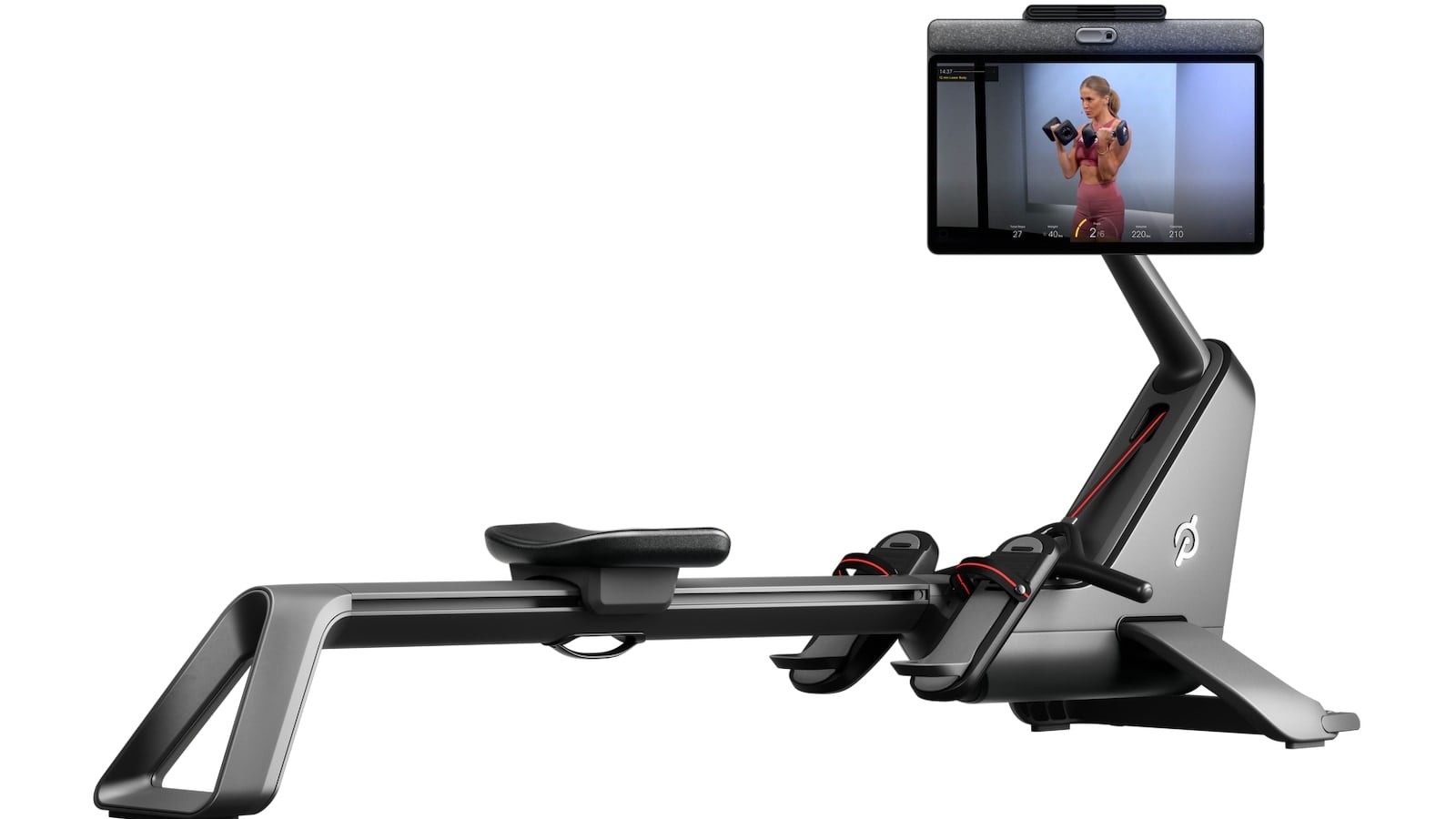
Peloton has been hit with another patent infringement lawsuit, this one aimed at the Peloton Row and its Form Assist feature.
The complaint was filed on Friday, July 24, 2026, in the U.S. District Court for the Eastern District of Texas, Marshall Division, the same court where Peloton has faced previous patent suits.
The plaintiff is Flow Motion Research and Development Ltd. It claims Peloton infringes three patents: U.S. Patent No. 9,987,520, U.S. Patent No. 11,745,055, and U.S. Patent No. 12,157,035. All three share the same title, “Method and System for Monitoring and Feed-Backing on Execution of Physical Exercise Routines,” and all three name the same three inventors.
The suit is limited to Peloton’s rowing lineup. The complaint names the original Peloton Row, the Cross Training Row+, the Row+ Pro sold through Peloton’s commercial line, and successor rowers that implement Form Assist, along with the associated software, firmware, subscription services, calibration and profile data, and Peloton-controlled computing resources. The Bike and Tread are not included in the suit.
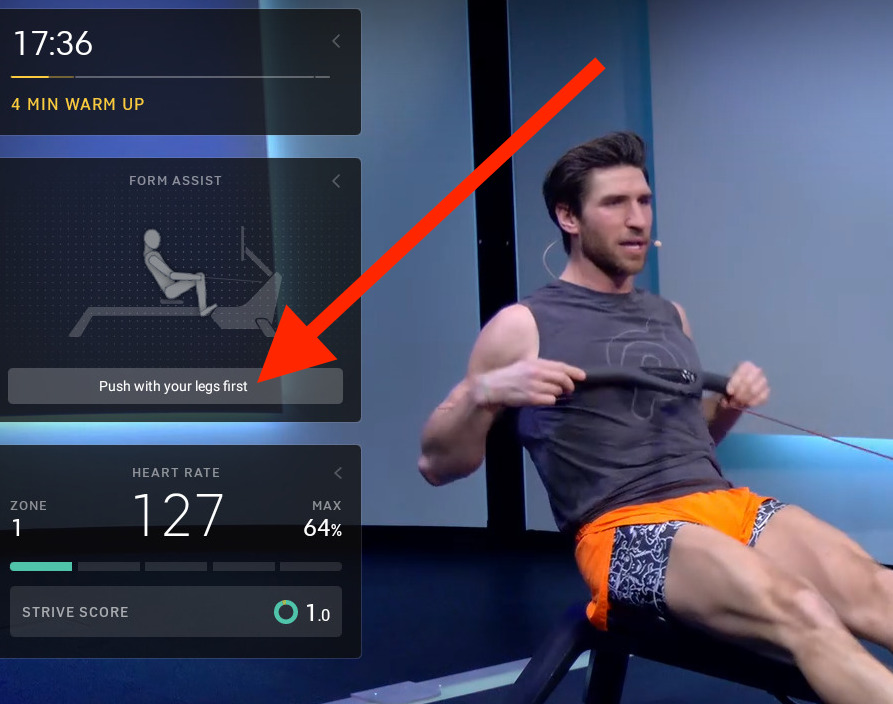
At the center of the lawsuit is the Peloton Row Form Assist, the feature that flags problems with a user’s rowing stroke in real time by lighting up the relevant body part on screen and, depending on the setting selected, providing a written correction.
The patent family describes using sensors to monitor someone exercising, generating a skeletal or other machine representation of that person, and comparing their movement against stored information about how the exercise should be performed, with any differences reported back as corrections. The requirements differ across the three patents. The earliest sets out the fullest sequence, involving a skeletal model, a comparison against stored routine information and the detection of incorrect movement. The two later patents use broader language around a “machine representation” of the user and the processing or calibration of sensor data.
The family was originally developed around a camera-based system rather than a rowing machine. It traces back to a provisional application filed in January 2011, and the specification and drawings focus heavily on a Pilates reformer with a depth camera mounted on a stand in front of it. The background section points to Microsoft’s Kinect for the Xbox 360 as an example of the sensor technology involved.
The claims themselves are not all expressly limited to cameras, though. They refer to motion or position sensors, which leaves a narrower question at the center of the case. Several of the claims require the system to use the appearance of the exercise device, one of its features, or a machine representation of the device in order to calibrate the sensor data or help build the representation of the user.
Flow Motion alleges “on information and belief” that Peloton does exactly that with the Row’s seat and handle. That is legal phrasing used when a plaintiff believes it has a reasonable basis for an allegation but expects the confirming facts to come out in discovery. Peloton’s public materials describe Form Assist as using seat and handle sensors calibrated to each user, but they do not explain how the software processes that data, and most of what the complaint cites is public: support pages, blog posts, product materials, a PCMag hands-on review and a YouTube review video.
The complaint credits the invention to Arie Shavit, who it says came up with the idea in 2010 while attending Pilates classes, after noticing how hard it was for an instructor to set the right resistance for each participant, monitor everyone’s form and track their progress from one class to the next.
Flow Motion’s patent filings date back to the early 2010s and include separate filings on electronically controlled resistance for exercise equipment. The company does not appear to have a public-facing product today.
The three asserted patents are part of a chain of continuation applications running from that January 2011 provisional to an application filed in May 2023, which was issued in December 2024. Earlier claims in the family were framed around a Pilates device, while the later ones use the broader term “exercise device.” The newest was filed after the Row was already on the market, though because it claims the family’s 2011 priority date, the later filing date does not mean the invention dates from 2023.
Peloton’s last patent suit in this court came from a different kind of plaintiff. When Portus sued in May over two home-security patents, that complaint openly described the company as a non-practicing entity with no products, and the filing was part of a campaign that had already reached Tonal, iFit, Amazon, and Samsung. A search of federal court records did not turn up another lawsuit by Flow Motion, and these three patents do not appear to have been asserted in U.S. litigation before.
Peloton has been through similar cases in this court. Mad Dogg Athletics, the company behind the “Spinning” trademark, sued Peloton in the Eastern District of Texas in 2020 using a similar venue argument based on Peloton’s Plano campus and its Texas retail locations. A judge dismissed that case the following year, without prejudice, after concluding the patents were directed at an abstract idea and that the complaint had not shown an inventive concept that would make the claims patent-eligible. More recently, Peloton challenged three Johnson Health Tech patents at the Patent Trial and Appeal Board, the board found the challenged claims unpatentable, and the parties agreed to dismiss the related lawsuit, which effectively ended that case.
Flow Motion is asking for damages of at least a reasonable royalty, enhanced damages for alleged willful infringement, interest, costs and attorneys’ fees. It does not expressly request an injunction, so there is no specific request that Peloton be ordered to stop selling or supporting its rowers.
Flow Motion alleges Peloton knew about the patents at least once the lawsuit was filed and served, and does not allege it sent notice beforehand. Its enhanced damages claim therefore rests at least partly on Peloton continuing the alleged infringement after learning of the patents through the case itself.
As of publication, Peloton has not publicly commented on the lawsuit or filed a response. The case is only at the complaint stage, and no court has ruled on infringement, the validity of the patents or how the claims should be interpreted.
What do you make of this latest lawsuit against Peloton?
Support the site! Enjoy the news & guides we provide? Help us keep bringing you the news. Pelo Buddy is completely free, but you can help support the site with a one-time or monthly donation that will go to our writers, editors, and more. Find out more details here.
Get Our Newsletter Want to be sure to never miss any Peloton news? Sign up for our newsletter and get all the latest Peloton updates & Peloton rumors sent directly to your inbox.

Leave a Reply