

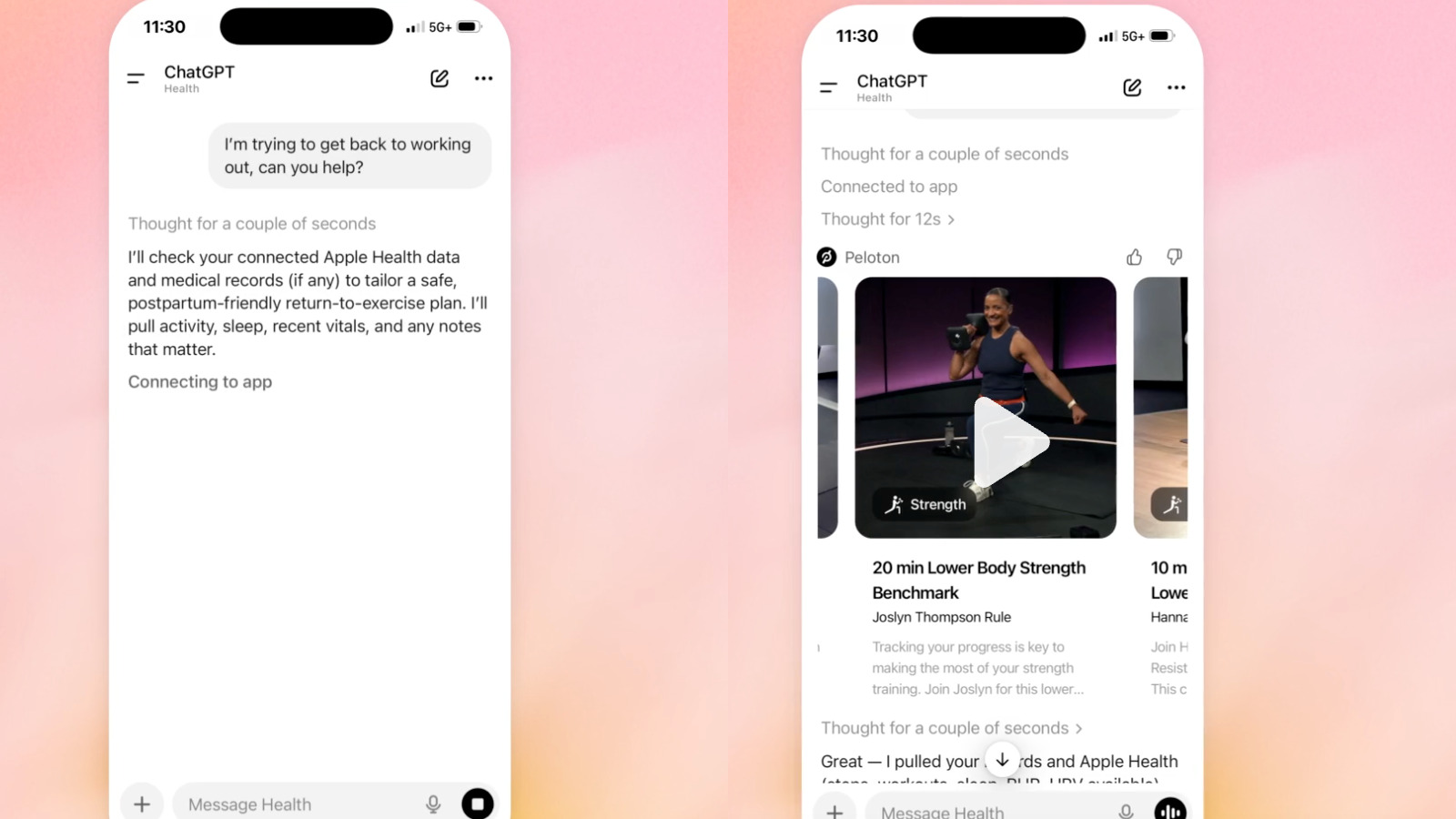
On January 7, OpenAI, the parent company of ChatGPT, announced the launch of ChatGPT Health, which enables users to link their health data to ChatGPT and leverage the power of AI to gain a deeper understanding of their health. Peloton is one of the initial launch partners of ChatGPT Health – which will be able to recommend specific Peloton classes based on your health history.
Peloton first commenced a partnership with ChatGPT late last year. Now, Peloton members who use ChatGPT can harness the power of ChatGPT Health to assist them with their health goals.
In its press release announcing ChatGPT Health, OpenAI explained that the new service is partly in response to its users constantly asking ChatGPT about their health conditions and seeking recommendations. According to the company, the goal of ChatGPT Health is to allow users to learn more about their health history and information and to complement – not replace – their healthcare and wellness routines.
Users can connect health-oriented apps such as Apple Health and MyFitnessPal to supply health data that, in turn, will be used by ChatGPT Health to assist users with their health goals. OpenAI added that they consulted with physicians and developed a standards assessment called HealthBench, which incorporates “physician-written rubrics that reflect how clinicians judge quality in practice—prioritizing safety, clarity, appropriate escalation of care, and respect for individual context.”
As shown in a brief video, Peloton users who previously set up ChatGPT integration with the Peloton app will be able to use ChatGPT Health to further their health and fitness objectives using their own health data. For example, a Peloton member might ask ChatGPT Health to analyze their physical examination results and then provide Peloton classes that will help them address any issues that came up during the physical.
Alternatively, a member could have ChatGPT Health summarize the calories burned during their Peloton running classes in preparation for a visit to a dietitian. Again, OpenAI states that ChatGPT Health is not meant to replace a person’s medical care but rather to support their care.
ChatGPT Health is still operating as a waiting list, but should be available soon to all users of ChatGPT, including those with free accounts. Interested Peloton members can log into their ChatGPT accounts and then sign up for the waitlist. Once granted access, members will have to do the following to set up ChatGPT Health and use it with Peloton:
- Navigate to the ChatGPT Health area in the sidebar
- Link their health apps individually to ChatGPT and set up sharing permissions for each one
- Ensure they have already allowed ChatGPT access to their Peloton account
Once the above steps are taken, members should be able to begin ChatGPT Health chats to dive into their health data and see how Peloton classes and programs can improve their overall wellness at even higher levels of detail.
OpenAI recognizes that privacy is clearly the most pressing concern for potential ChatGPT Health users. Because ChatGPT Health involves the transmission of private and sensitive health data, users will keep their health-related chats in a separate area from their non-health chats. OpenAI states that all ChatGPT chats are provided a level of encryption but that ChatGPT Health contains even more encryption than standard chats.
Additionally, the chats within ChatGPT Health do not filter into the model training process, unlike non-health chats. ChatGPT also uses b.well, which it says is “the largest and most secure network of live, connected health data for U.S. consumers,” to connect medical records with healthcare providers. In connecting Apple Health and other similar apps, users can set the privacy levels and permissions to control data being fed to ChatGPT Health and can revoke any (or all) permissions if they decide to abandon using ChatGPT Health.
It will be interesting to see how popular ChatGPT Health generally becomes, especially since it will mean people sharing their medical data on an AI platform, something that once seemed inconceivable given AI’s privacy and security concerns.
Another question is whether Peloton members will use ChatGPT Health as part of their health and wellness routines. As discussed by Pelo Buddy last year, Peloton members looking for ChatGPT-generated workout plans would likely have to pay for ChatGPT or else run out of queries during a chat session. At this point, it is uncertain whether the same limitations will come into play with ChatGPT Health. There has already been significant discussion – such as this thread on Reddit – about the pros and cons of using ChatGPT Health.
Pelo Buddy will continue to monitor this story and will follow up with an in-depth review once ChatGPT Health becomes available to the public.
Support the site! Enjoy the news & guides we provide? Help us keep bringing you the news. Pelo Buddy is completely free, but you can help support the site with a one-time or monthly donation that will go to our writers, editors, and more. Find out more details here.
Get Our Newsletter Want to be sure to never miss any Peloton news? Sign up for our newsletter and get all the latest Peloton updates & Peloton rumors sent directly to your inbox.

Leave a Reply