

Peloton is one of the launch connectors available for Muse, the new personal AI agent released by Meta this week.
Muse is designed to complete tasks on a user’s behalf – similar to how Claude Cowork and ChatGPT Work function. It says it can continue working after the app has been closed, ask for approval when needed, and monitor things over time.
For Peloton members, it has the ability to search for classes, add to schedules, build programs, and even give you daily alerts on new classes added to the schedule.
Muse is rolling out in the United States on iOS, Android, and the web at Muse.ai. Members can also communicate with it through WhatsApp. Most features are available through a free tier, with subscriptions available for people who need more usage.
This is Peloton’s third AI integration in less than a year. Peloton first launched a connector for ChatGPT in November, followed by the Peloton IQ chatbot and automatic workout plan builder inside the Peloton app in July.
We’ve had a chance to try out the Peloton functions inside the Muse AI integration. This includes class searches, adding and removing classes from the Peloton schedule, building strength and marathon plans, asking Muse to analyze an exported Peloton workout-history file, and continuing to run tasks in the background and alert us.
Most simple requests were completed quickly, and scheduling classes was much more reliable than it was during our initial testing of Peloton’s ChatGPT integration. Muse can also build far more detailed training plans than Peloton IQ.
However, there are still major limitations in the Peloton data available through the connector. Most importantly, Muse cannot access a member’s workout history. Its attempt to analyze an uploaded Peloton workout-history export also produced significantly incorrect results.
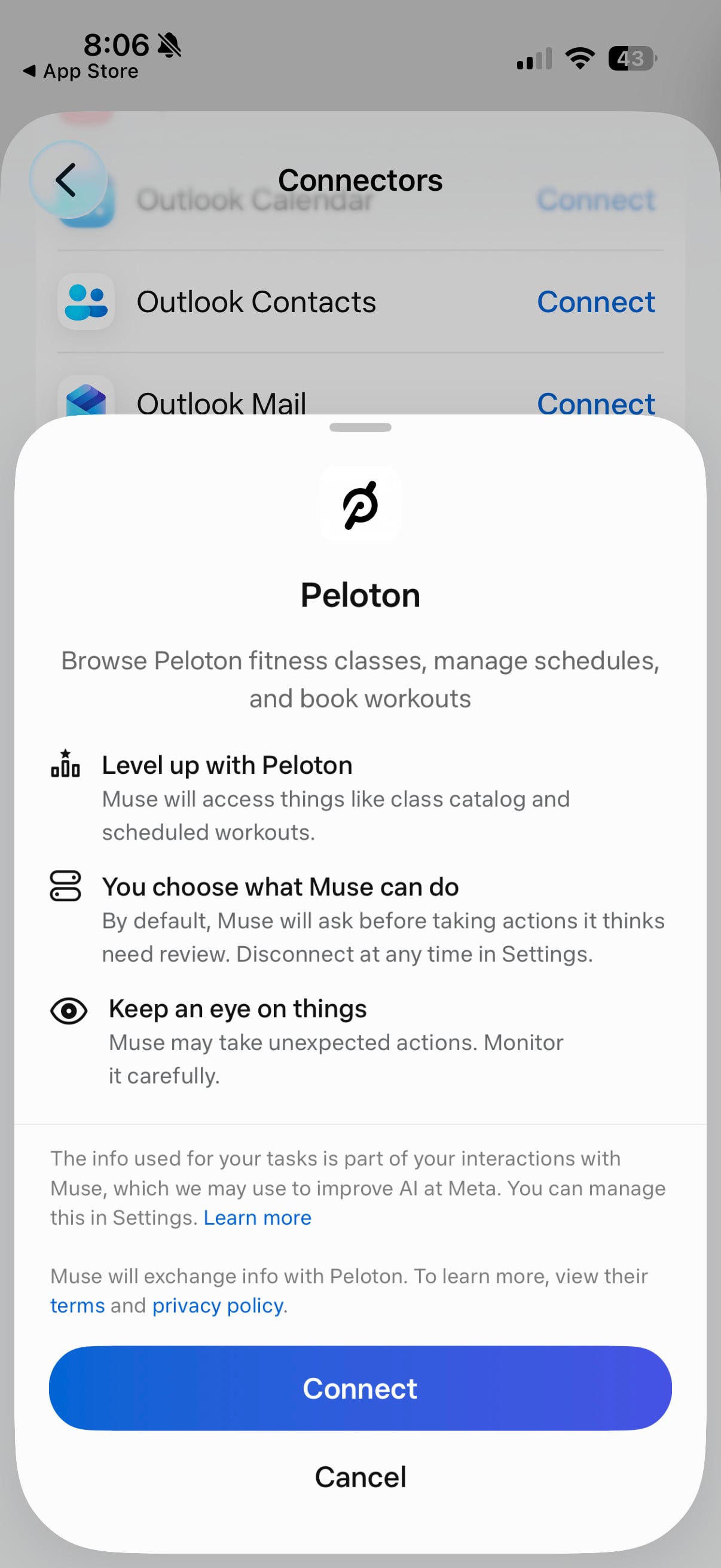
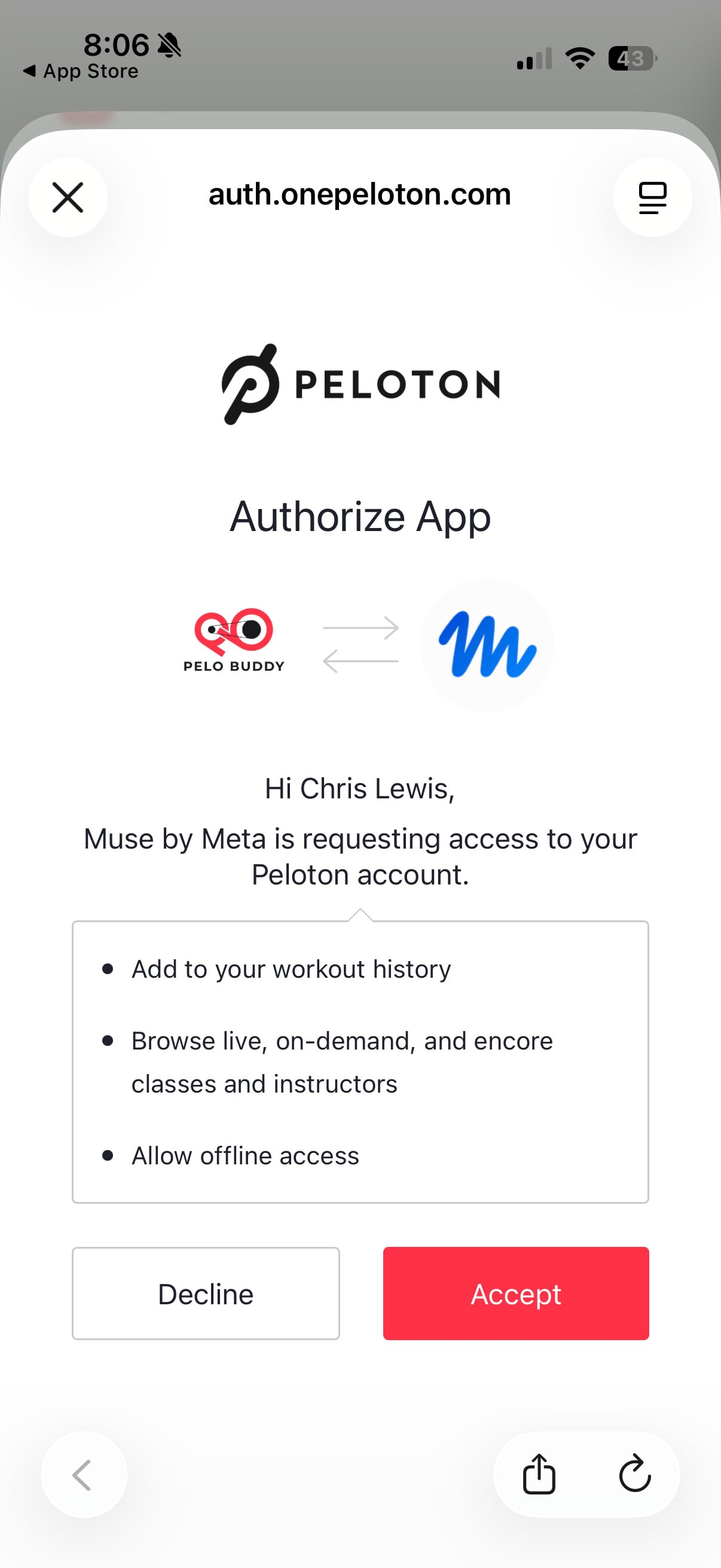
Peloton appears in the Connectors section of the Muse settings menu. Selecting it opens Peloton’s own OAuth authorization page at auth.onepeloton.com, so Peloton credentials are entered directly through Peloton rather than being provided to Muse.
The Peloton authorization page lists permission to add to workout history, browse live, on-demand, and encore classes and instructors, and maintain offline access.
There is no permission listed for reading a member’s workout history, which explains one of the integration’s biggest current limitations.
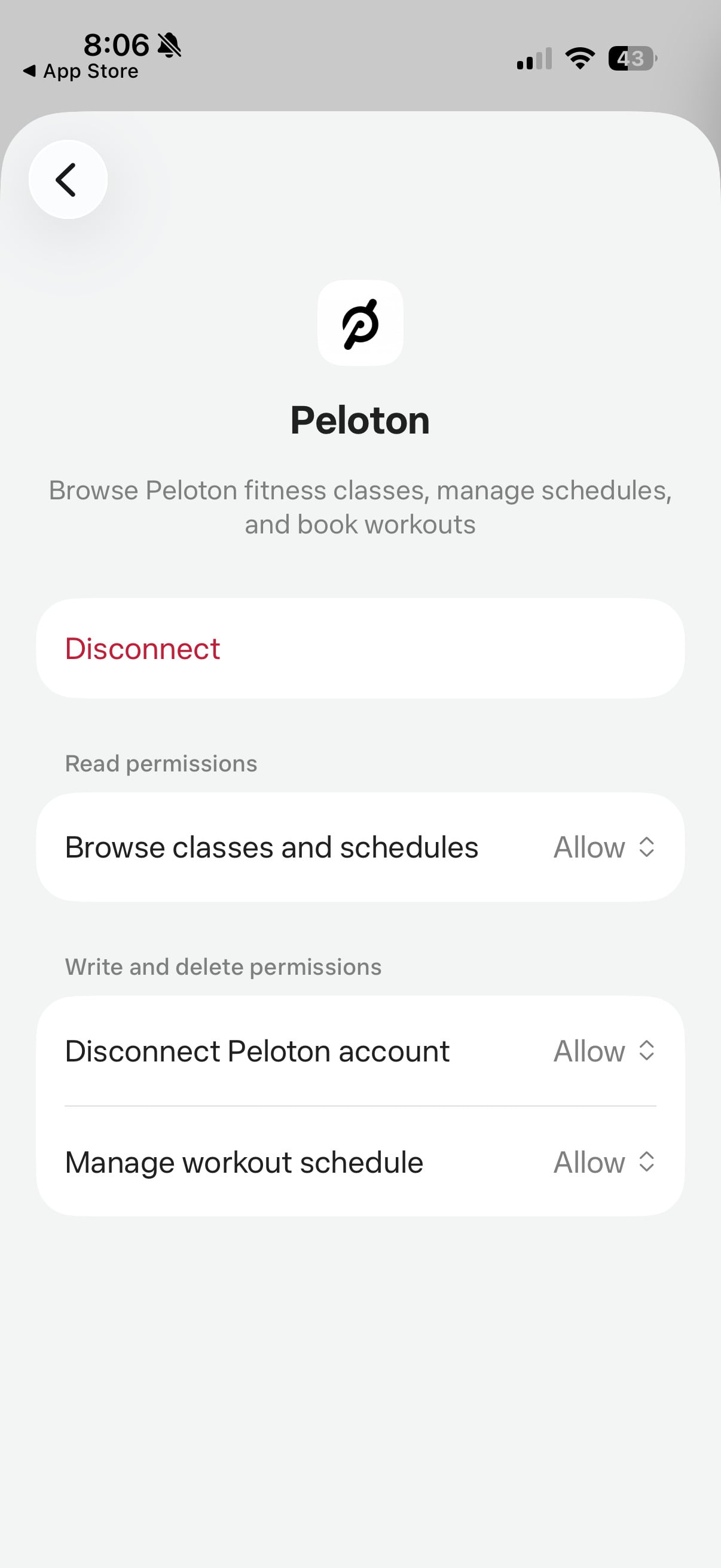
Muse provides separate controls for the individual actions available through the connector. Access to browsing classes and schedules, managing the workout schedule, and disconnecting the Peloton account can each be set to Allow, Ask, or Deny.
Setting schedule management to Ask requires Muse to request approval before adding, moving, or removing Peloton classes.
When asked what it could do with Peloton connected, Muse said it could browse classes by instructor, discipline, duration, difficulty, or music style; check upcoming live classes; book, reschedule, and cancel workouts; and provide direct links that open classes in Peloton.
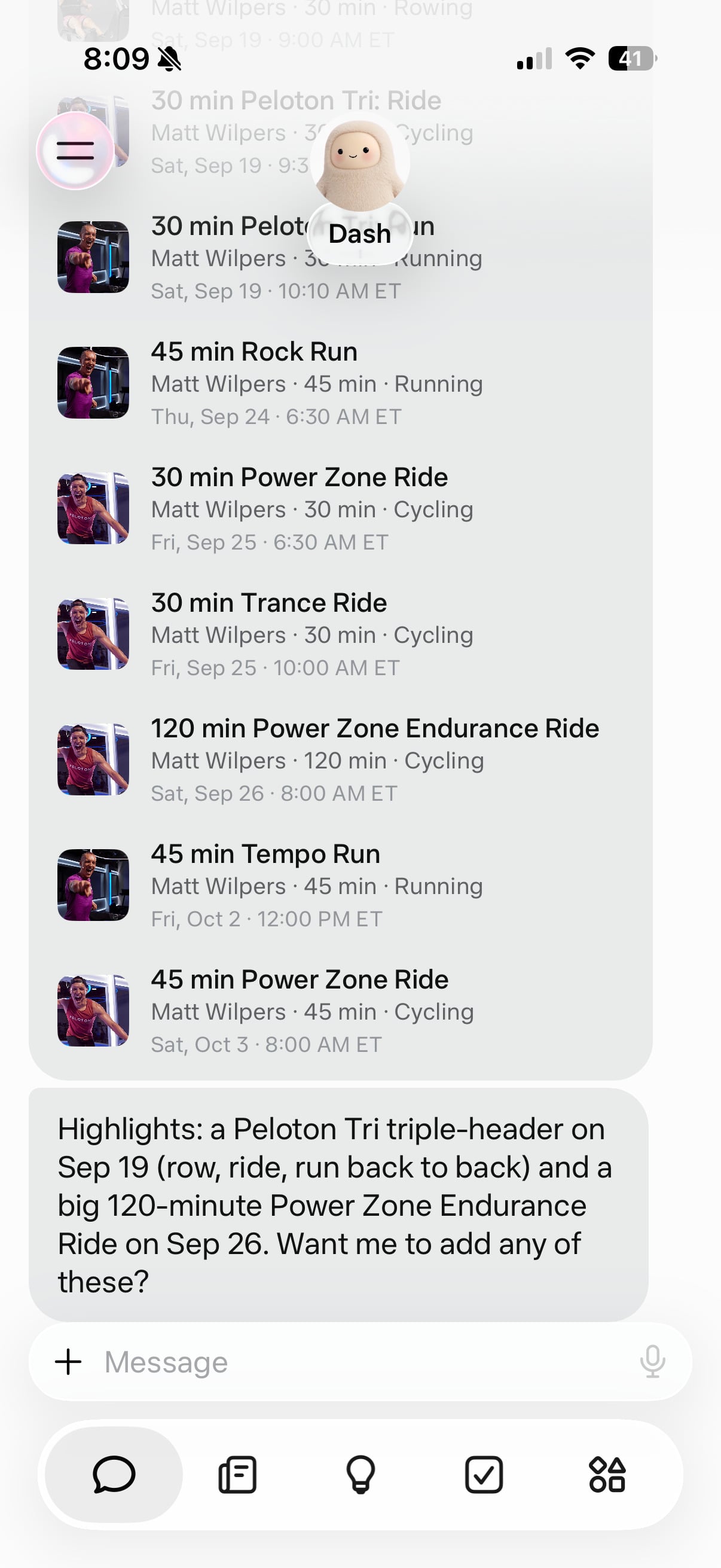
Basic searches worked well during our testing. Asking for Matt Wilpers’ upcoming classes returned three live classes over the following week. Expanding the search to 30 days returned 14 classes extending through October 3. This ability to search up to 30 days is likely a quirk that will be removed in the future, as Peloton only lets you see the upcoming 2 weeks worth of classes in the Peloton app.
The results included a Peloton Tri triple-header on September 19 and a 120 minute Power Zone Endurance Ride on September 26.
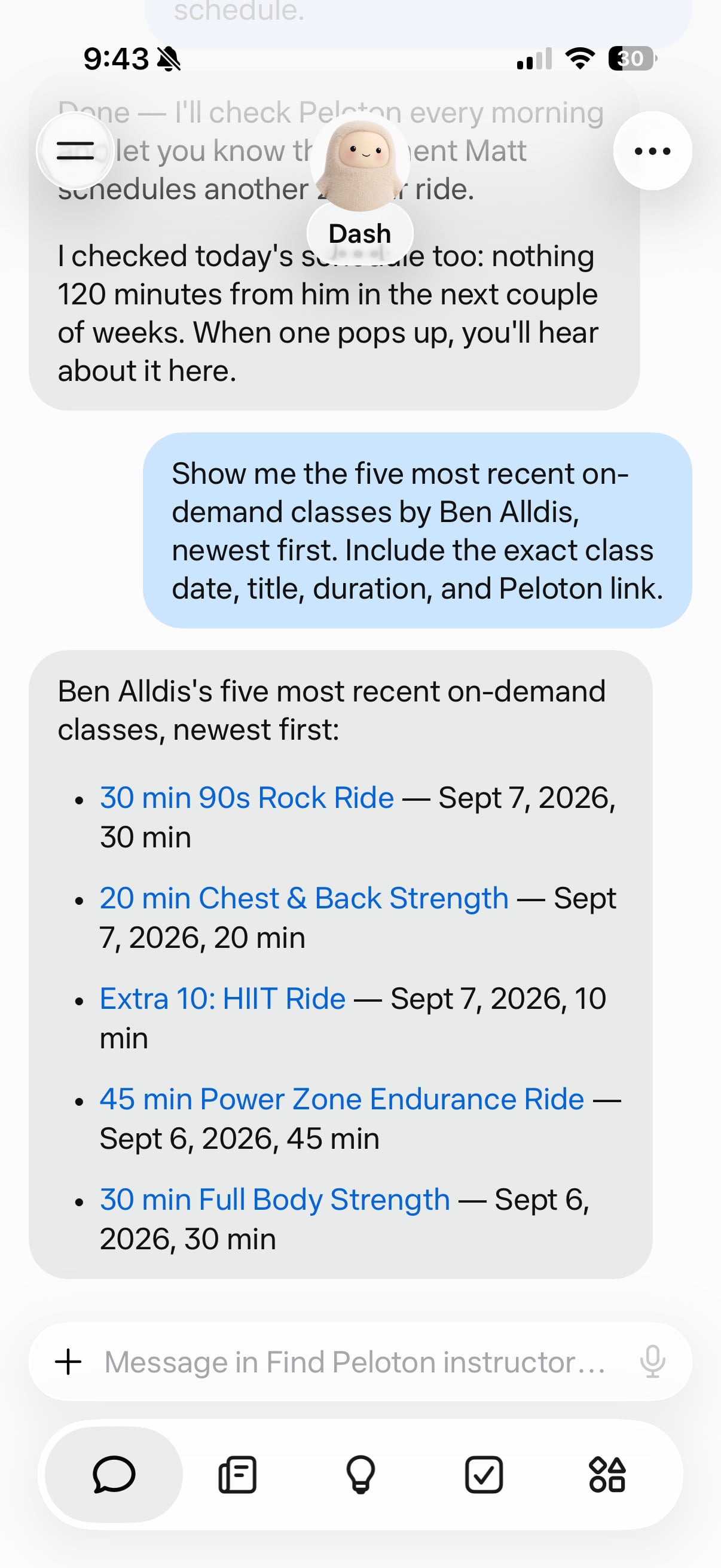
Muse also performed much better than ChatGPT when asked for an instructor’s most recent on-demand classes. A request for Ben Alldis’ five newest classes returned workouts from September 6 and 7, just one or two days old. During our testing of the ChatGPT integration last November, a similar request returned supposedly recent classes from 2021 and 2022.
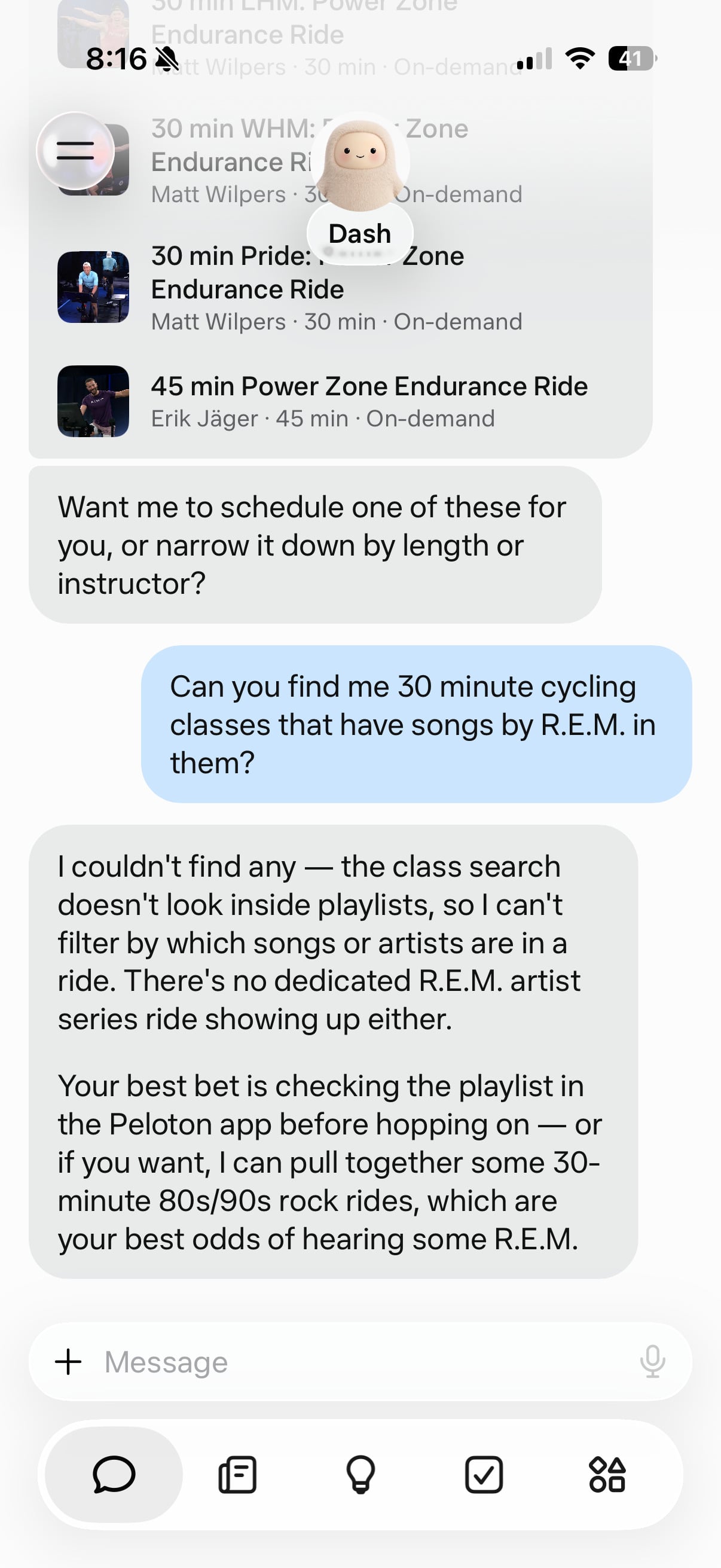
However, Muse was not able to search for classes based on artists or songs included in the playlists of classes. For example, we searched for classes with songs by R.E.M., which it explained it could not do.
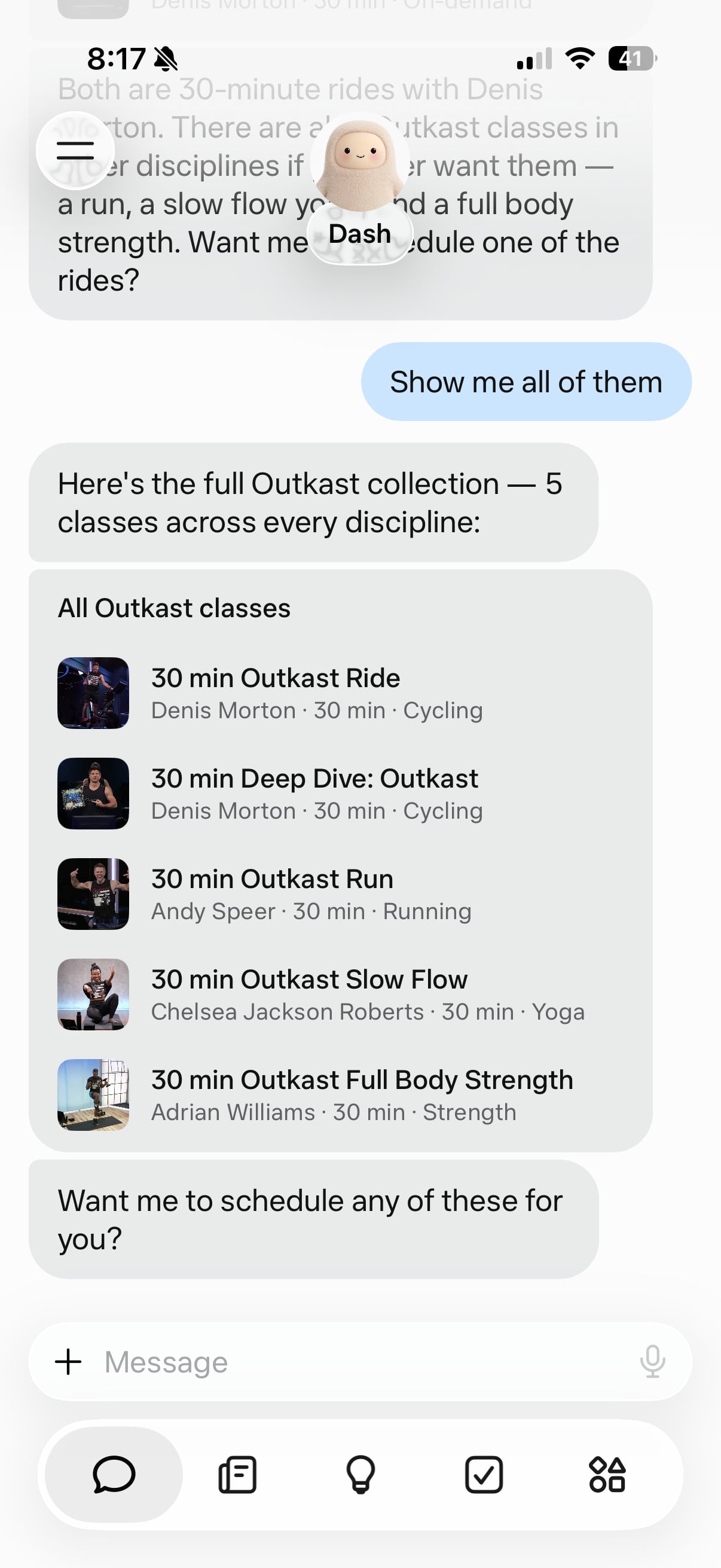
A search for Outkast classes did work, but that was because Peloton has an Outkast Artist Series and the artist’s name appears in the class titles. When asked for every Outkast class, Muse correctly returned five workouts across cycling, running, strength, and yoga.
Muse also could not find classes that stay entirely in Power Zone 2. It returned Power Zone Endurance rides and explained that they generally use Zones 2 and 3. The examples returned were in fact a mix of Zone 2 & 3, rather than just pure zone 2 classes.
A search for hypertrophy strength classes caused Muse to share why it couldn’t find them, but to suggest some specific class types to look for.
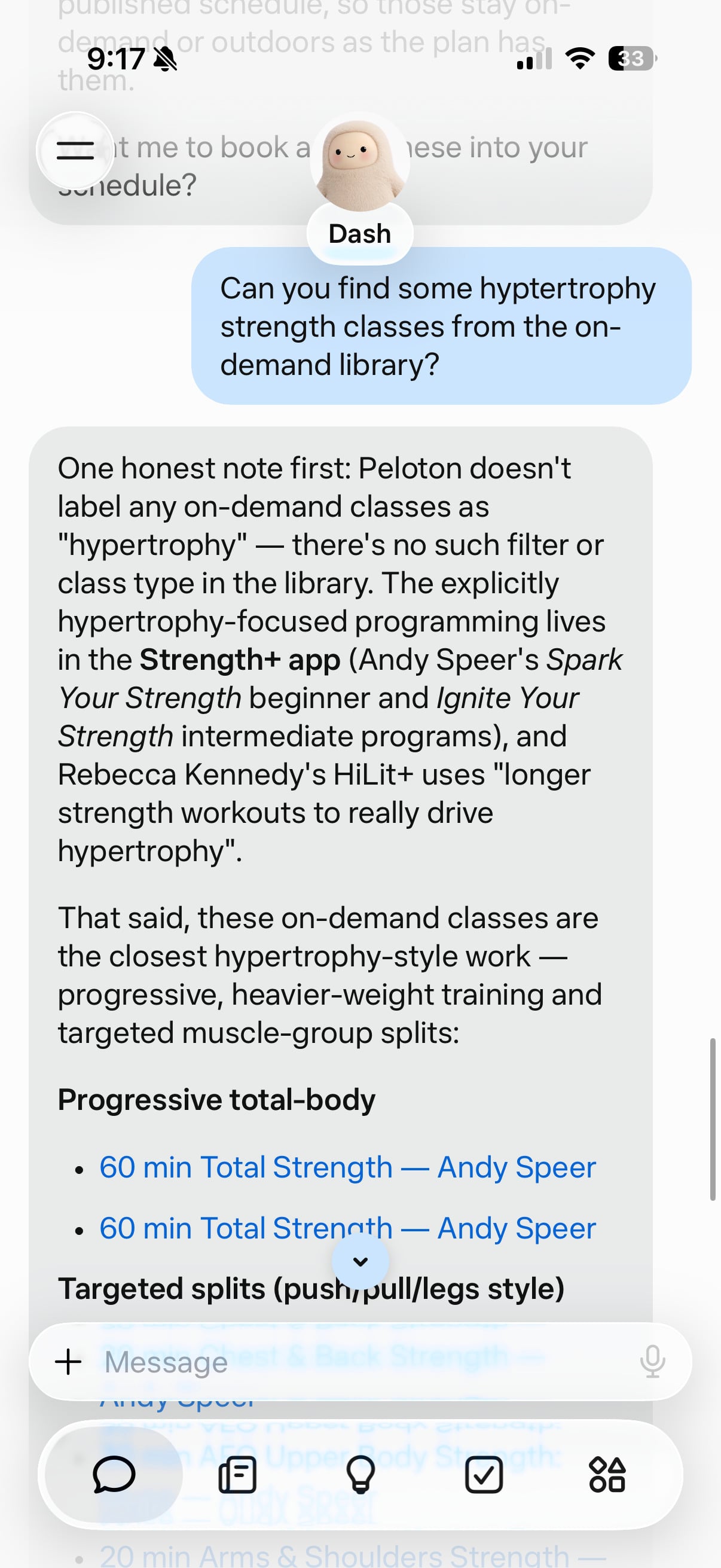
Scheduling classes on Peloton through Muse worked as expected in almost every aspect.
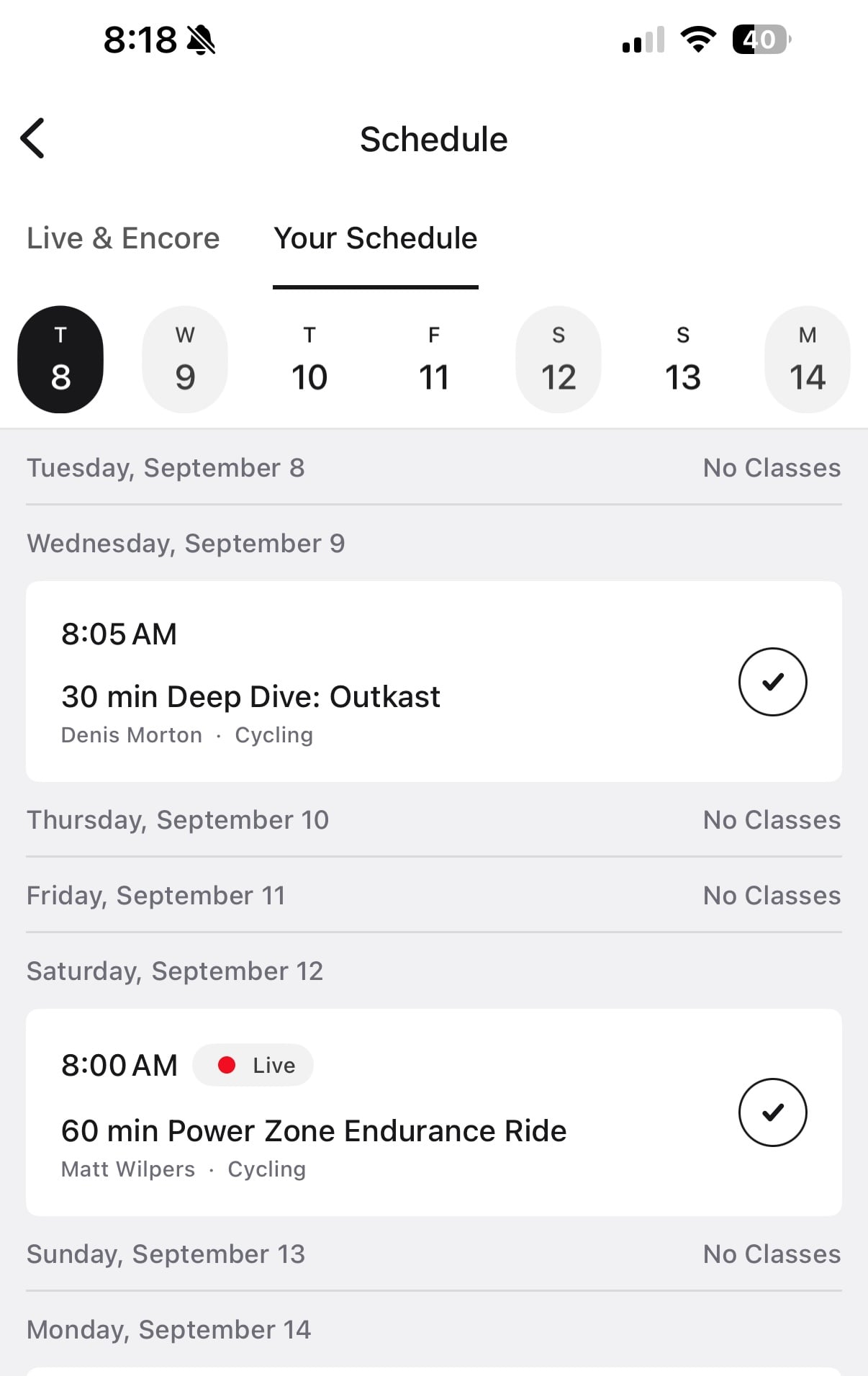
Muse added a 60 minute Power Zone Endurance Ride with Matt Wilpers to the Peloton schedule, and the class appeared in the Peloton app immediately. It also scheduled Denis Morton’s 30 minute Deep Dive: Outkast class and then was able to move it to another day when asked.
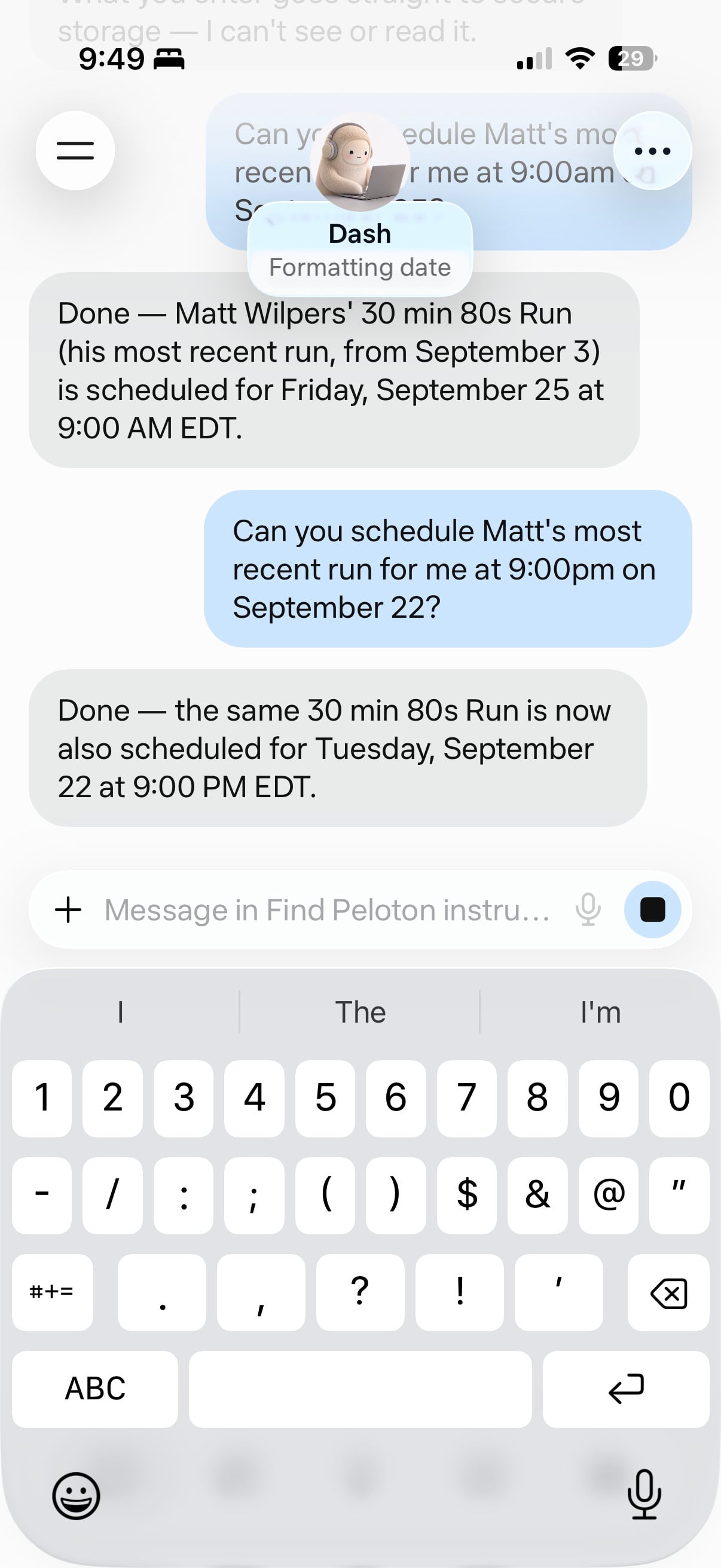
Muse did attempt to add classes beyond the two weeks currently visible in the Peloton app. It scheduled Matt Wilpers’ 30 minute 80s Run from September 3rd for both September 22 and September 25.
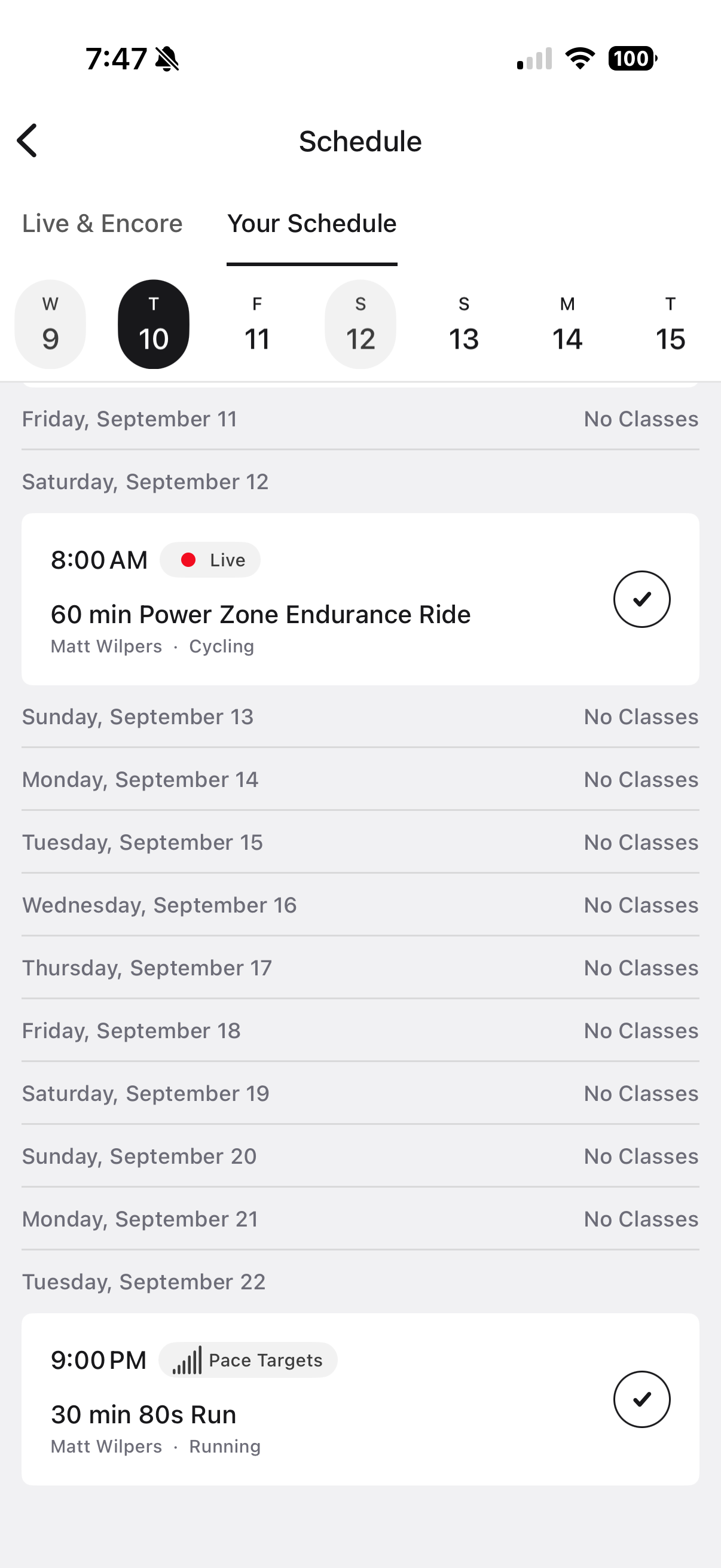
Since the Peloton schedule only shows the next 2 weeks, the September 25 & 22nd addition were not visible, even though it suggested it had added it. However, once the schedule rolled forward a day to the next day, the class Muse had added on the 22nd was on the upcoming schedule.
Muse also handled a larger schedule change correctly. After adding 12 classes from a strength plan, we asked it to remove those workouts while leaving everything else alone. It removed the 12 strength classes and correctly kept two unrelated classes.
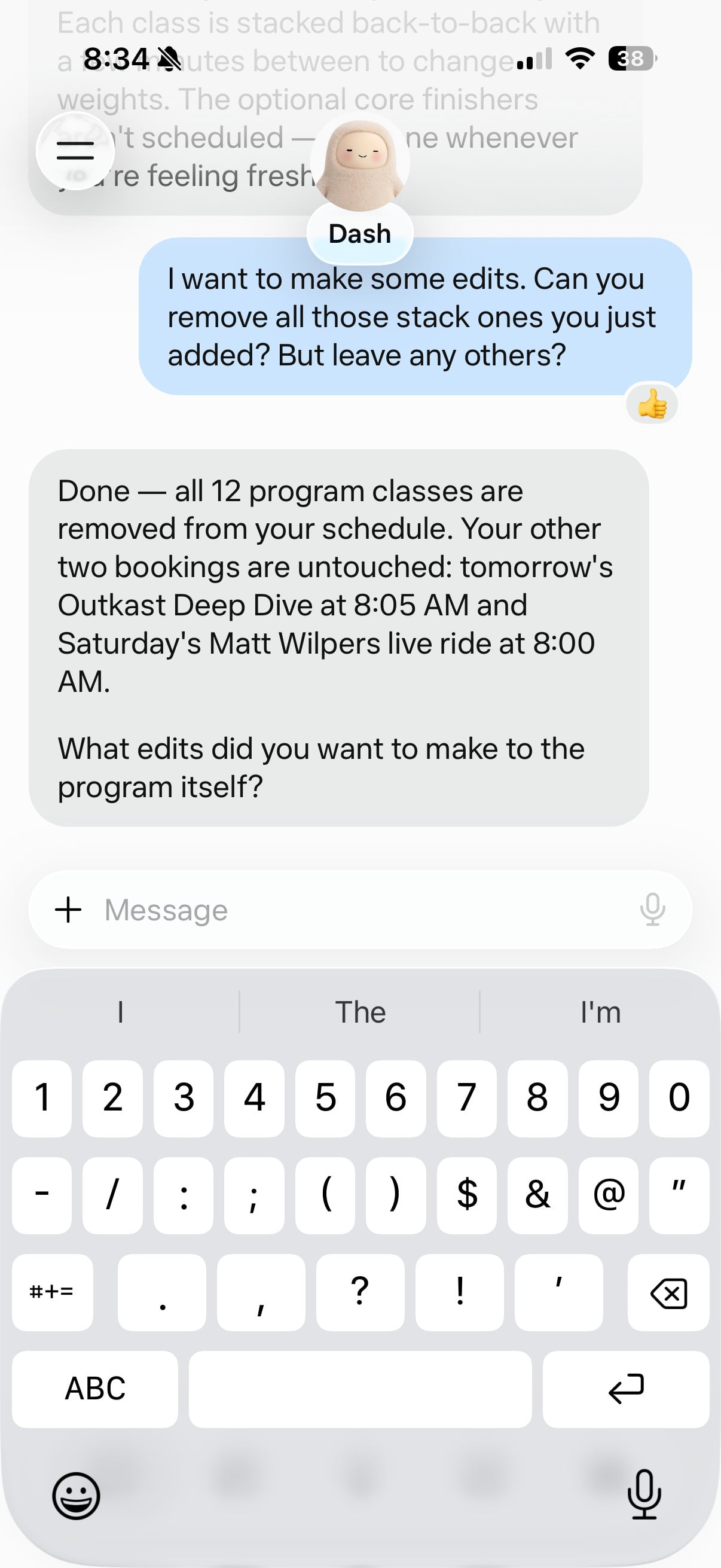
While Muse can add new classes to the schedule, and then move those, it does not have the ability to see classes already on your schedule that you did not add.
When asked which days still needed a workout, it explained that it could add, move, and delete scheduled workouts but could not review the full existing schedule.
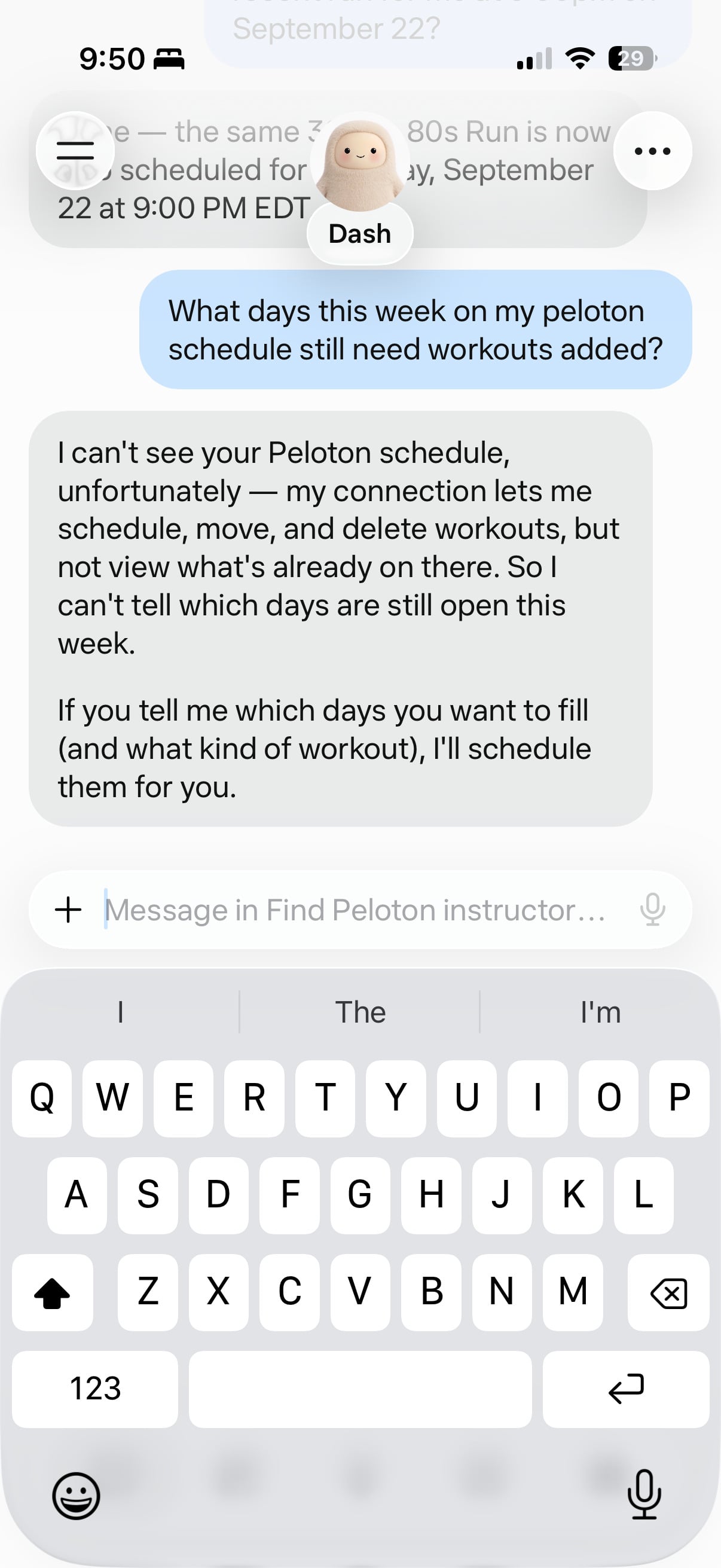
Muse appears to only have access to “standard” Peloton classes in the catalog, and can only work with your schedule.
Muse cannot add classes to the Peloton Stack. It can provide a direct link to a class, but the member must open Peloton and add it to the Stack manually. It also cannot search Lanebreak workouts or enroll a member in a Peloton Program.
In some cases, Muse offered to use its browser instead. When asked to find a Madonna Lanebreak level, for example, it opened Peloton’s website and asked for Peloton credentials to be placed in its separate secure credential system. This is an example of Muse trying to take action on a user’s behalf.
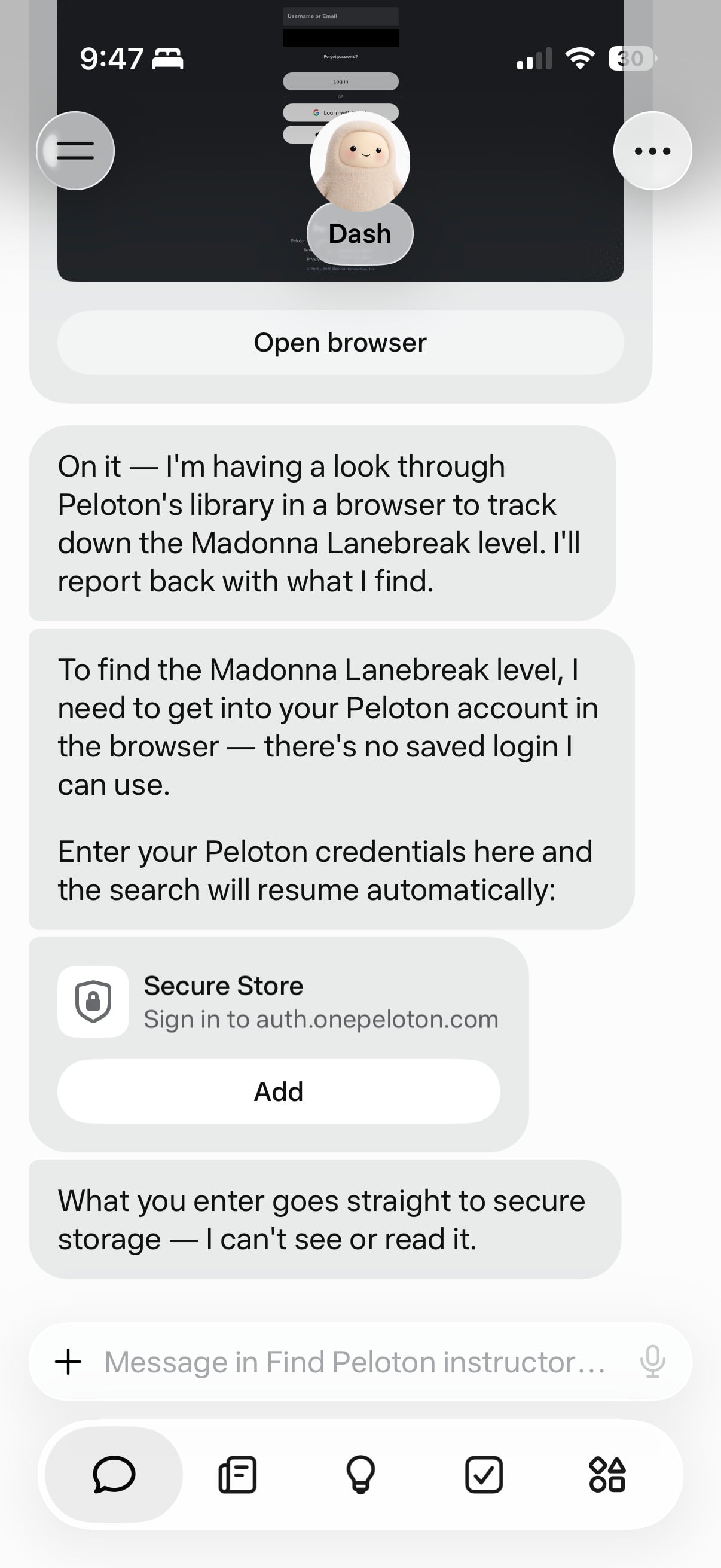
Muse also said that outdoor audio running classes were not included in the Peloton connector, but it did attempt to find them through the web instead.
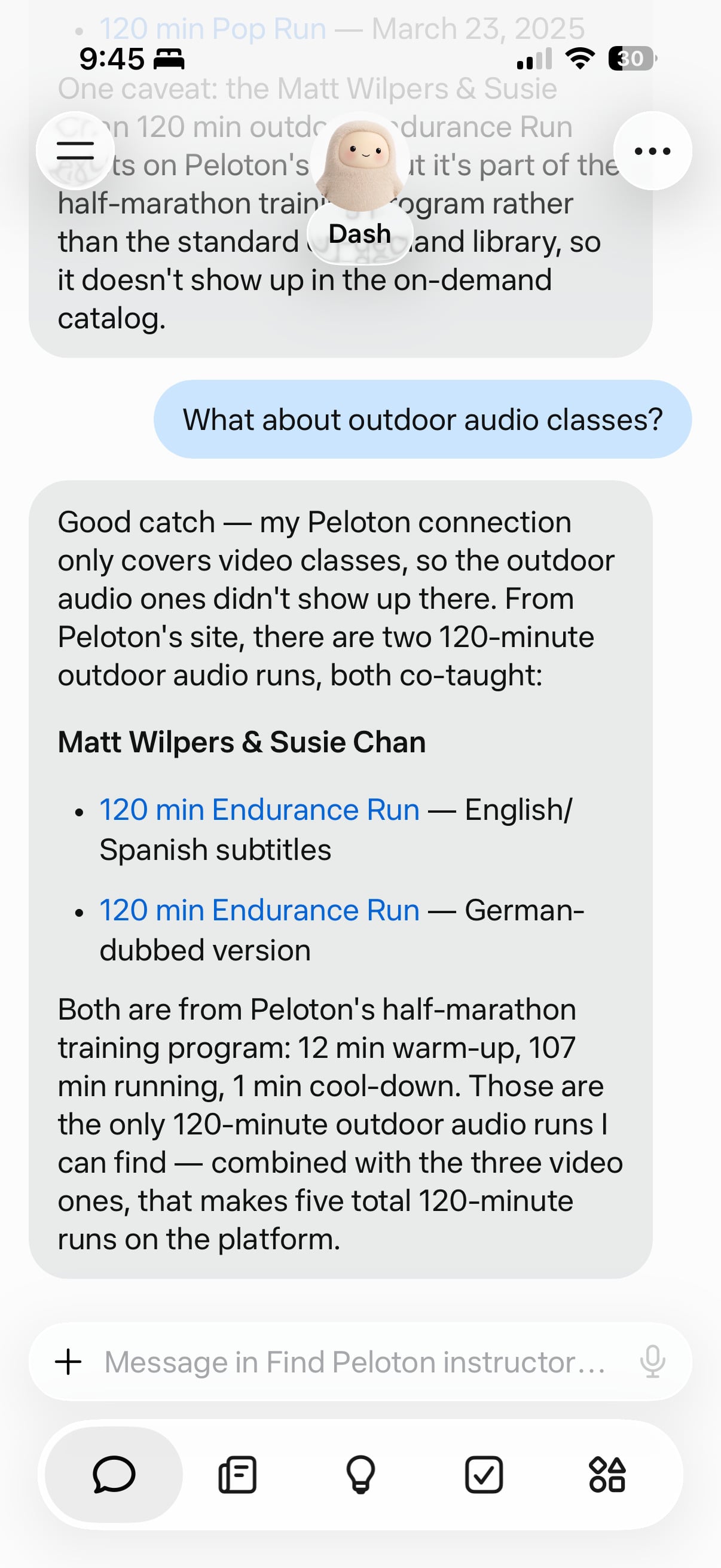
For example, when asked, Muse stated Peloton only had 3 2 hour running classes. This is technically true, as there are only 3 available in the standard on-demand library in the “running” category. However, it was not able to find the outdoor audio running classes.
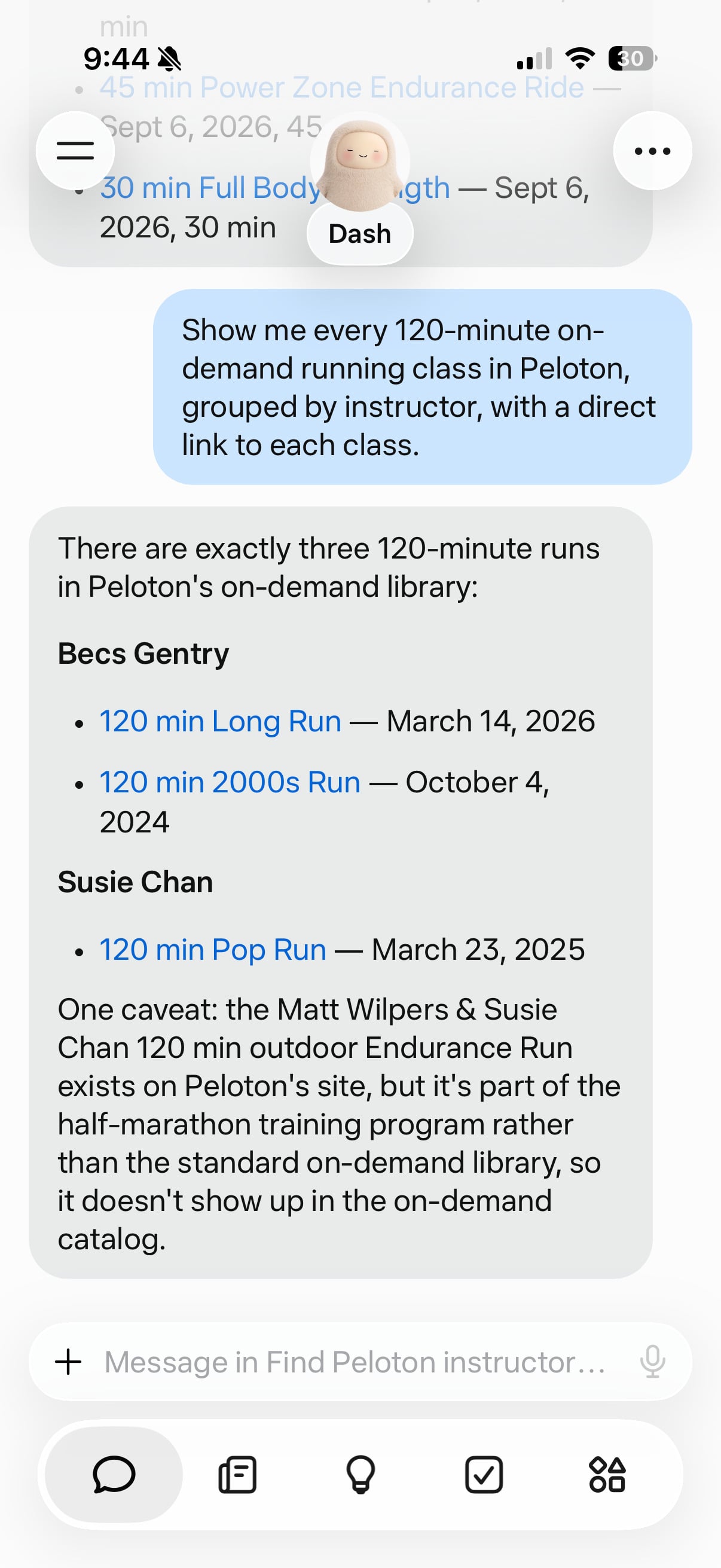
At one point, while building a program, Muse suggested only Becs Gentry had a 2 hour run. A fresh conversation produced a better answer that included Becs, Matt, and Susie, suggesting that at least some of the incorrect response may have resulted from the longer conversation losing context.
Muse also has the ability to create much more detailed workout plans than either of Peloton’s previous AI integrations.
Our first request for a five-day split strength program resulted in a generic gym plan instead of a Peloton plan, even though the conversation up to that point had focused on Peloton. After being specifically asked to use Peloton classes, Muse rebuilt the plan with 12 Peloton workouts spread across five days. The plan used two or three classes per day to target the requested muscle groups.
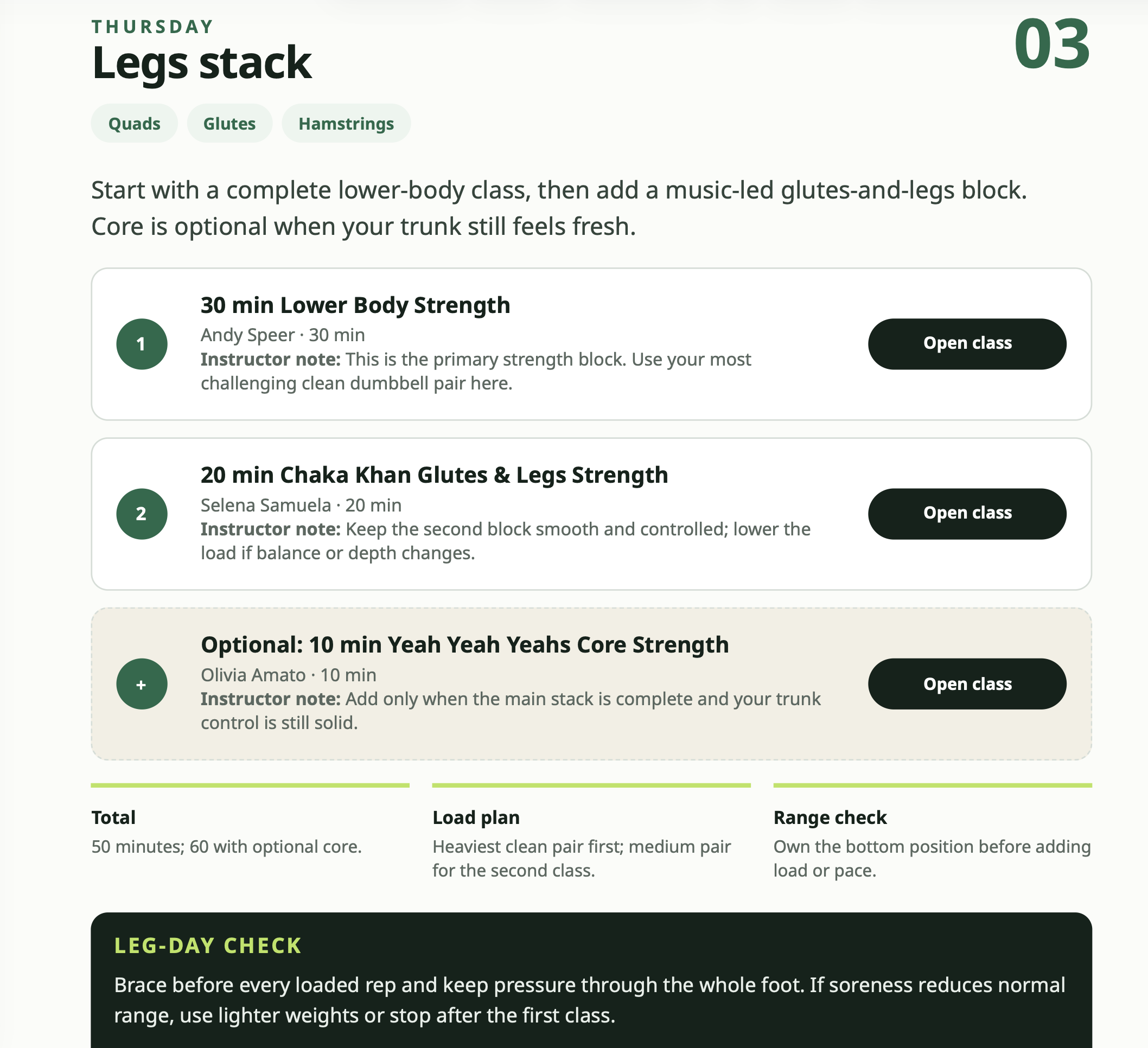
However, this build process resulted in a bug in the Muse app. Muse attempted to ask what equipment was available, but instead displayed the earlier choices asking what we wanted to name the assistant. We ignored those choices and typed in the available equipment, and Muse proceeded correctly.
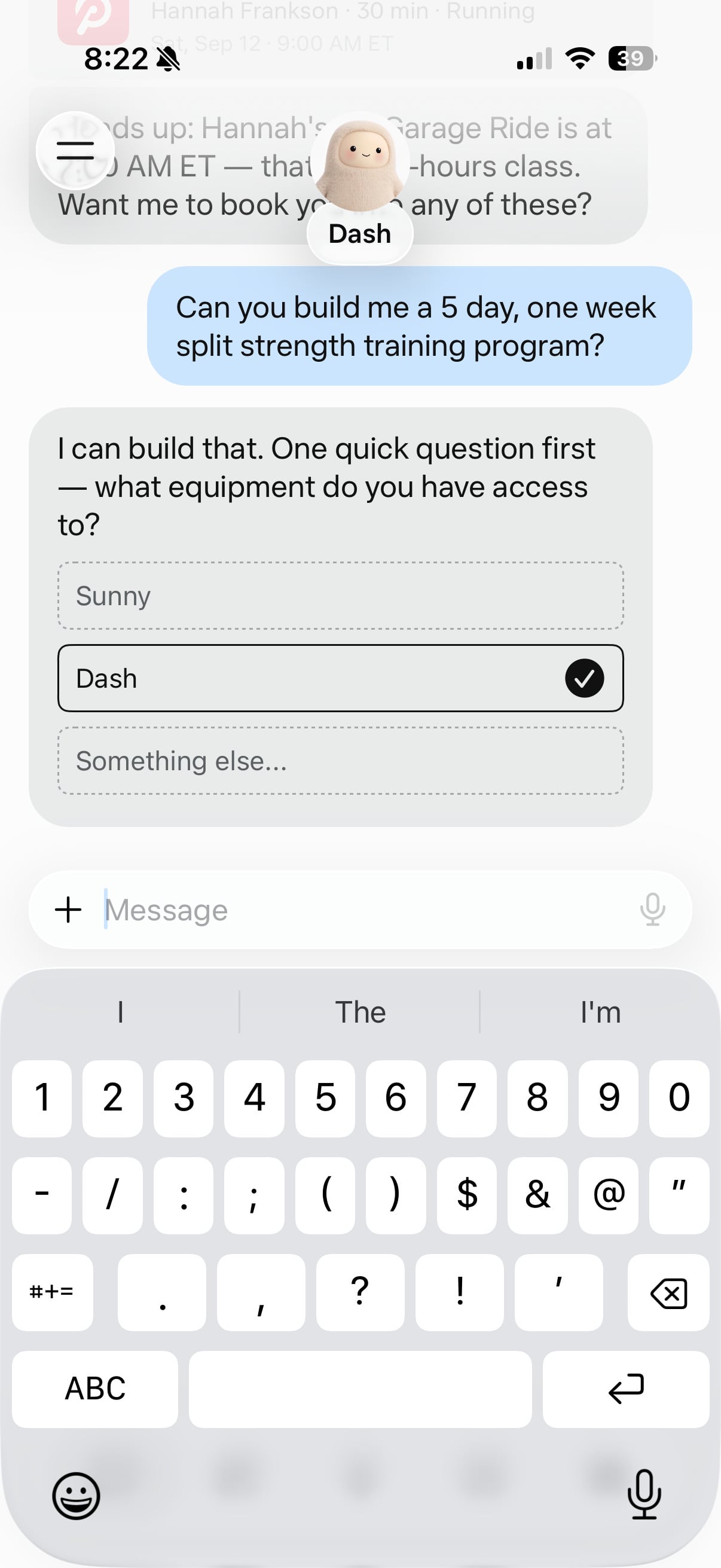
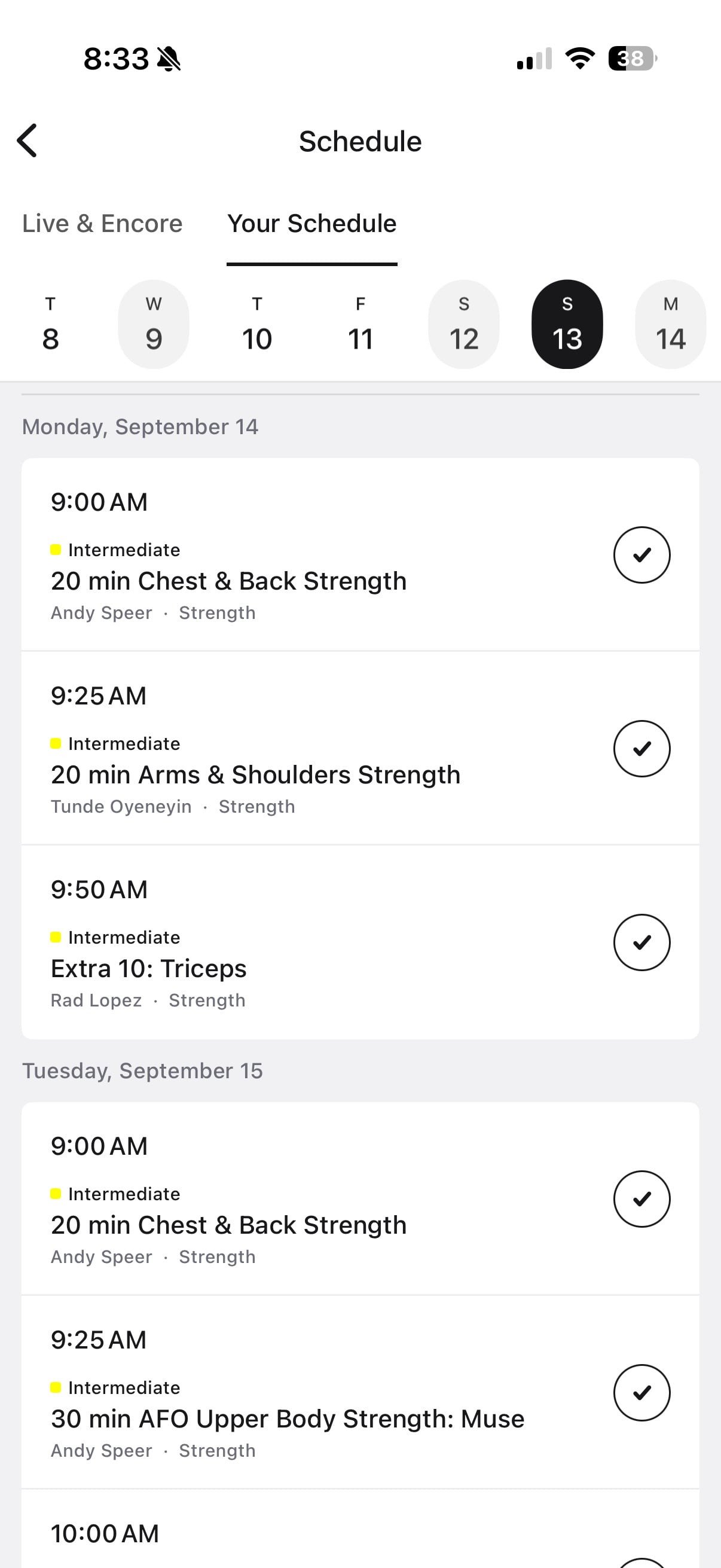
The Peloton-specific strength plan took approximately five minutes to complete and was delivered as a designed PDF. After being asked to, Muse then added all 12 classes to the Peloton schedule, using slightly offset start times so the classes were arranged back-to-back each day.
Muse was also able to build a complete marathon training plan using Peloton classes.
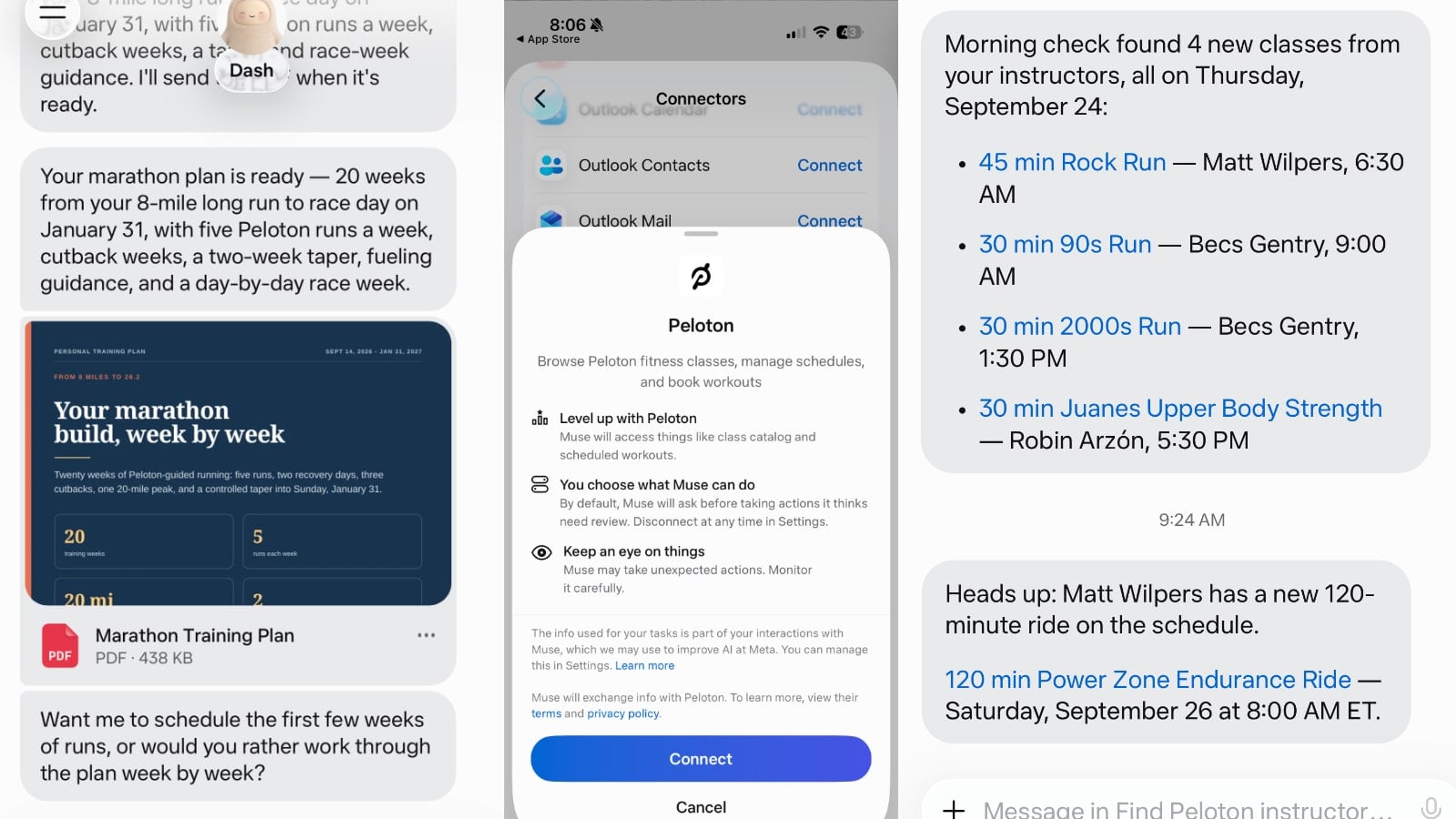
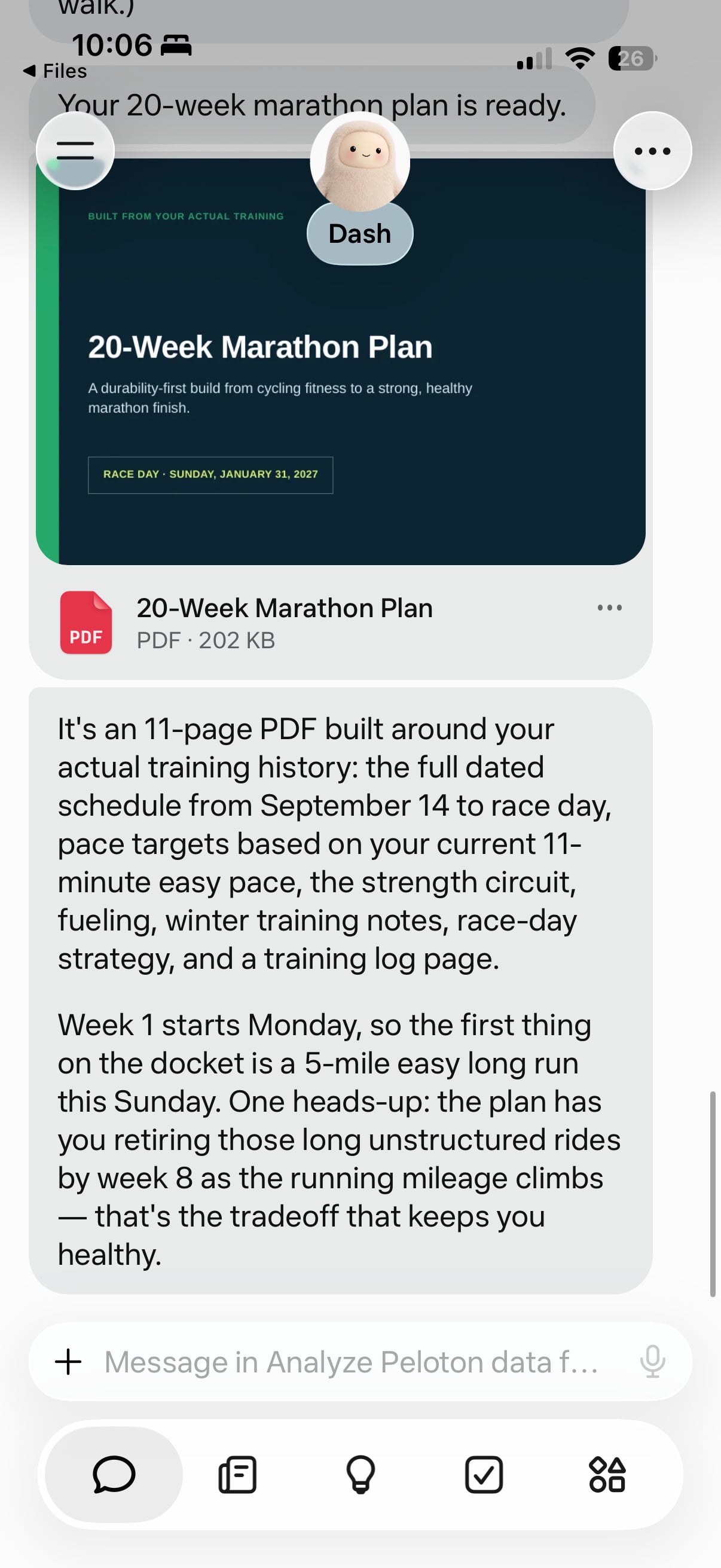
We told Muse that the runner currently had an eight-mile long run and was training for a January 31 marathon. In approximately five minutes, it created a complete 20-week plan with five runs per week, three cutback weeks, a 20-mile peak long run, and a taper.
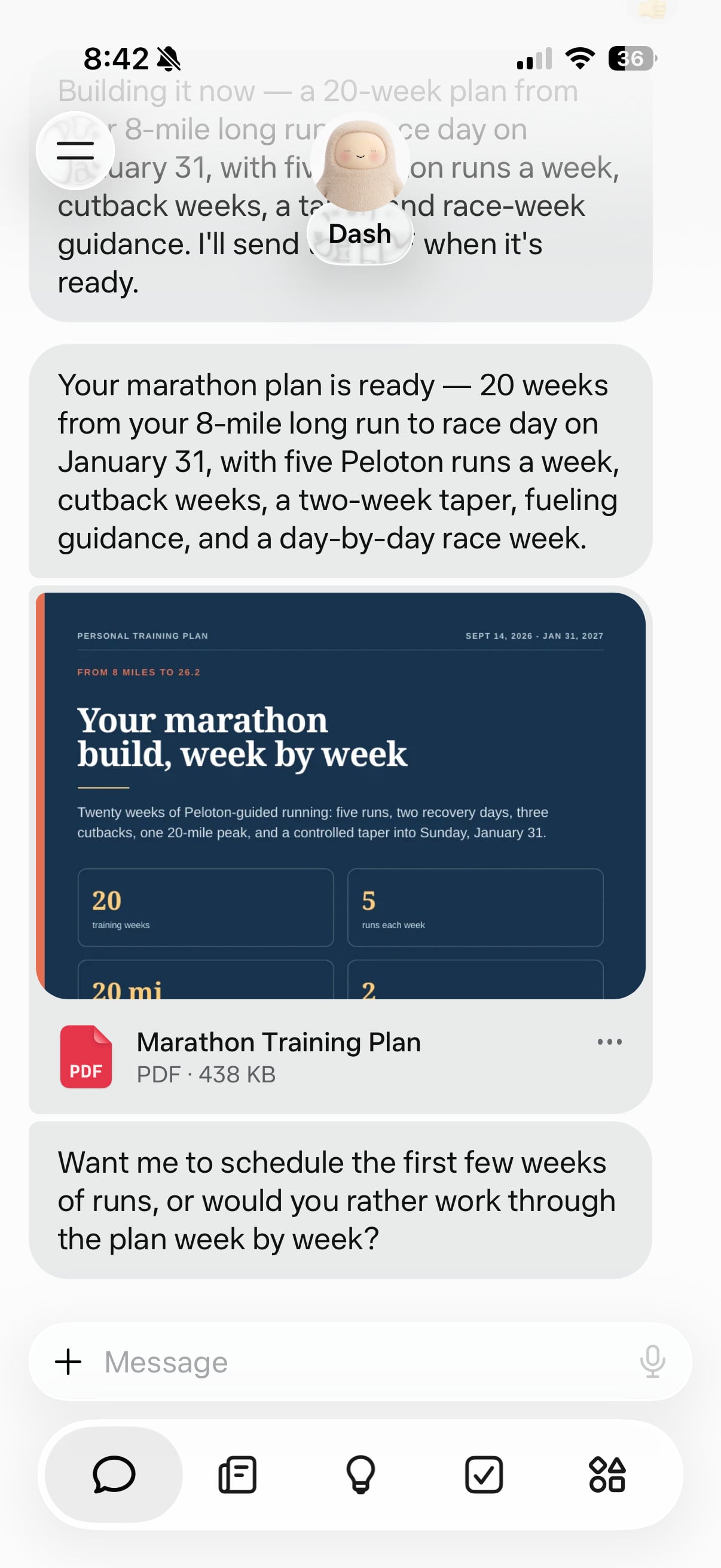
The plan included specific Peloton class recommendations and links to many of the selected workouts.
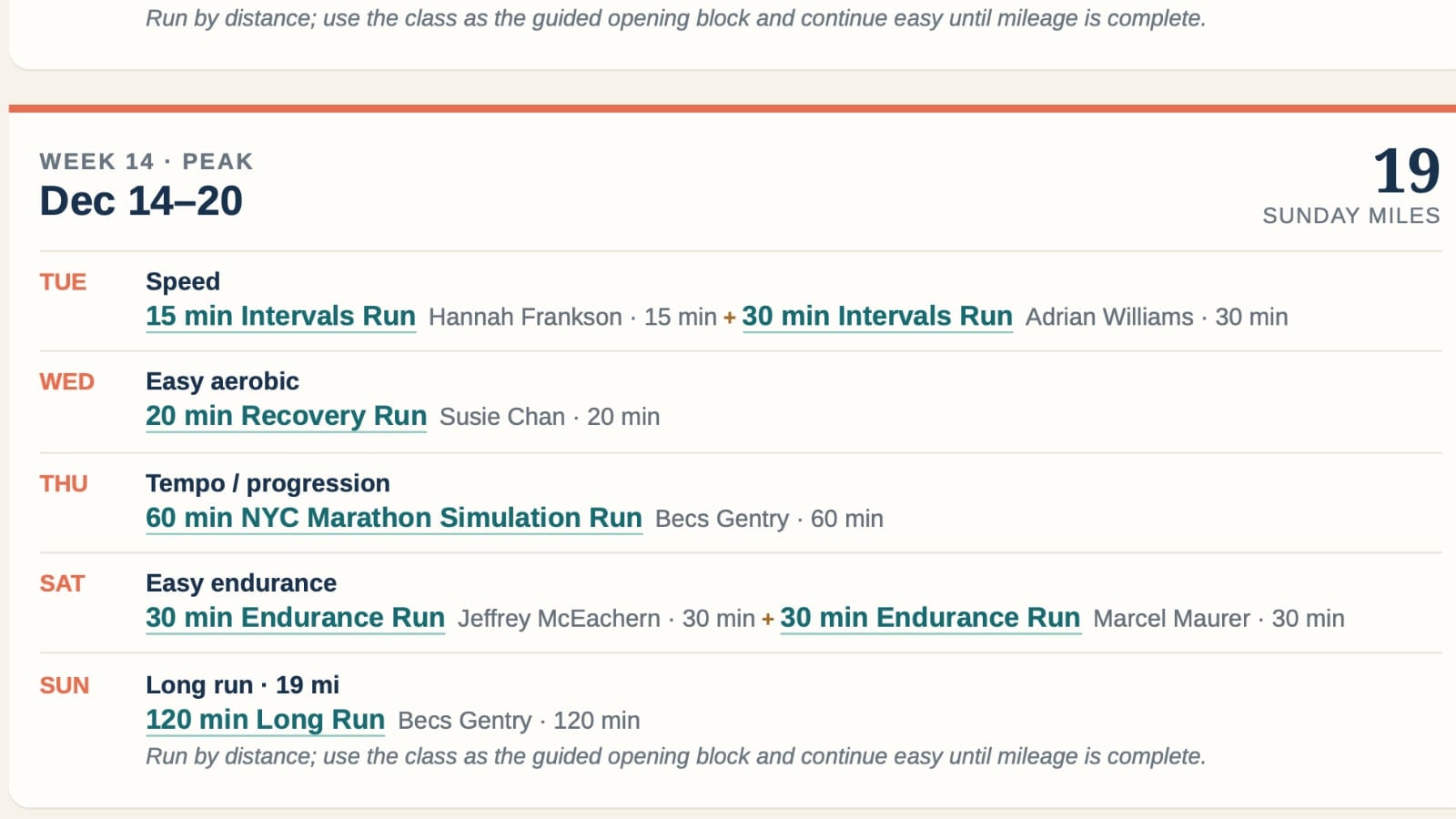
This is far beyond what the Peloton IQ plan builder currently supports. Peloton IQ creates a single week that repeats, limits workouts to 60 minutes, and generally selects workout types and durations rather than allowing the member to build a long-term plan around specific classes and instructors.
We then asked Muse to rebuild the marathon plan using only English-language classes and to prioritize Mariana Fernández, Matt Wilpers, Susie Chan, and Adrian Williams. That revision took approximately 25 minutes.
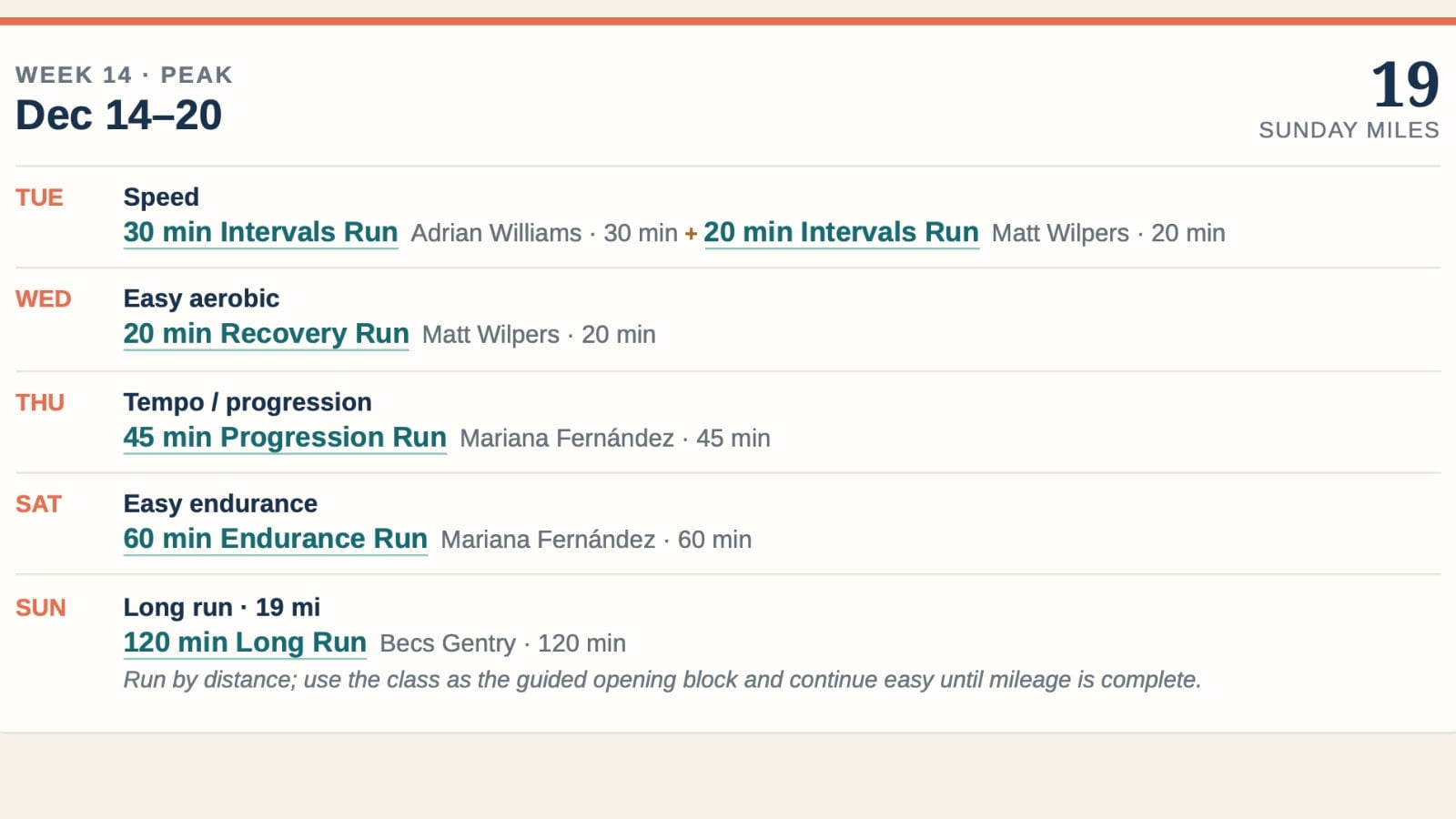
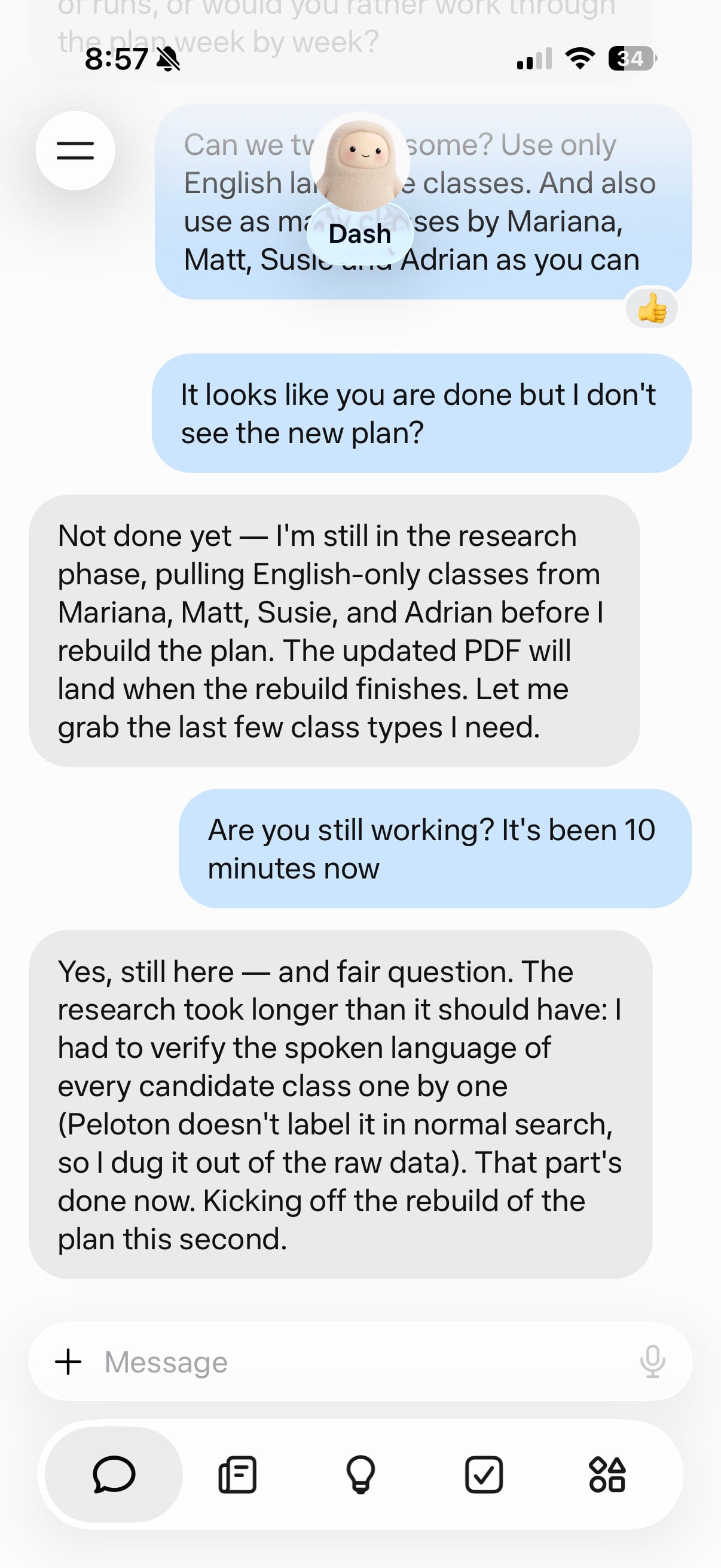
When asked about the delay, Muse said it needed to check the language of every potential class individually because Peloton’s normal class search did not provide that information efficiently. The original plan had included classes from German-language instructors.
The rebuilt plan did not simply exchange each original class for an equivalent English-language class. In some cases, a stack containing a 30 minute class and a 20 minute class became one 45 minute class, changing the total duration.
The plans also acknowledged that Peloton does not always offer enough class time to cover the prescribed long-run distance. On those days, Muse instructed the runner to continue after the selected class ended.
Finally, we asked Muse to rebuild the plan around Peloton’s Pace Your Race marathon program.
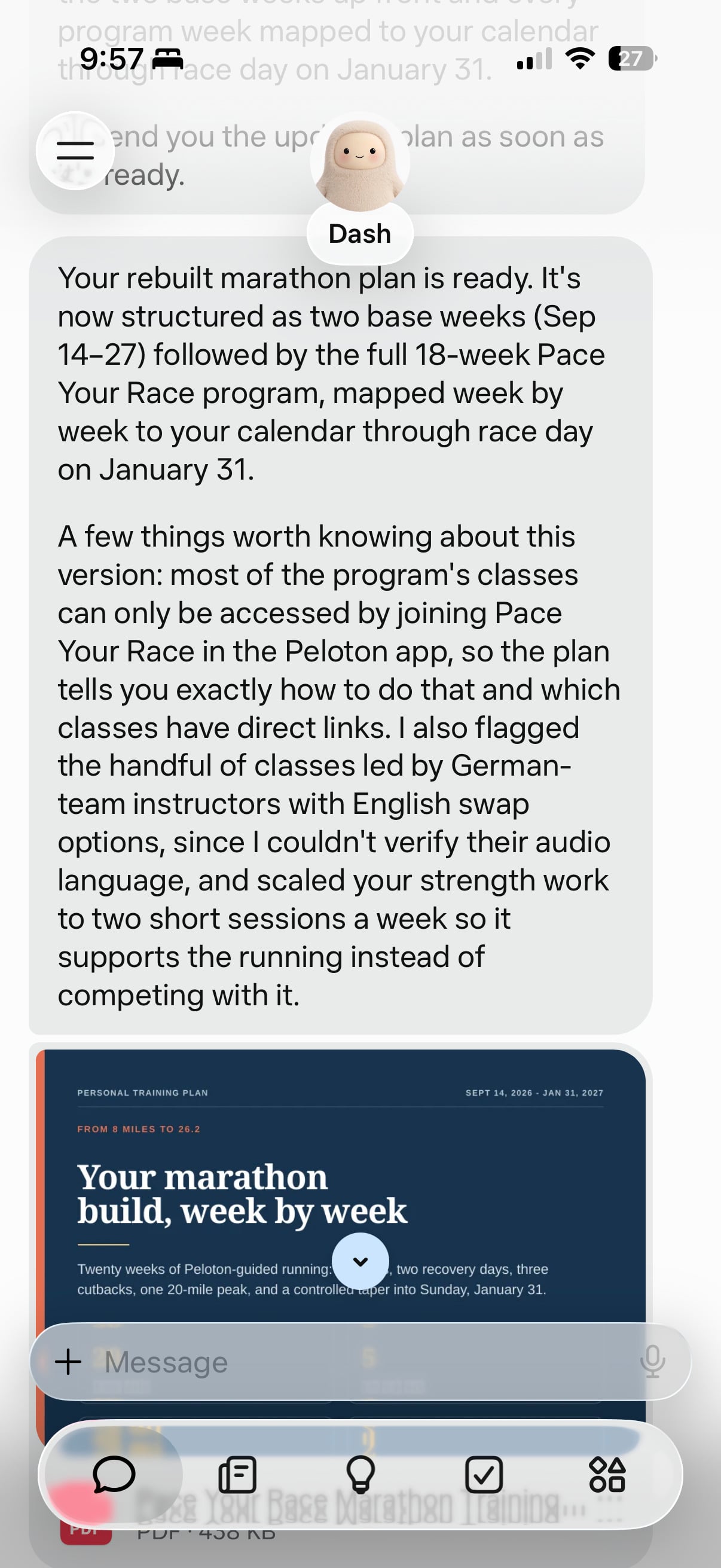
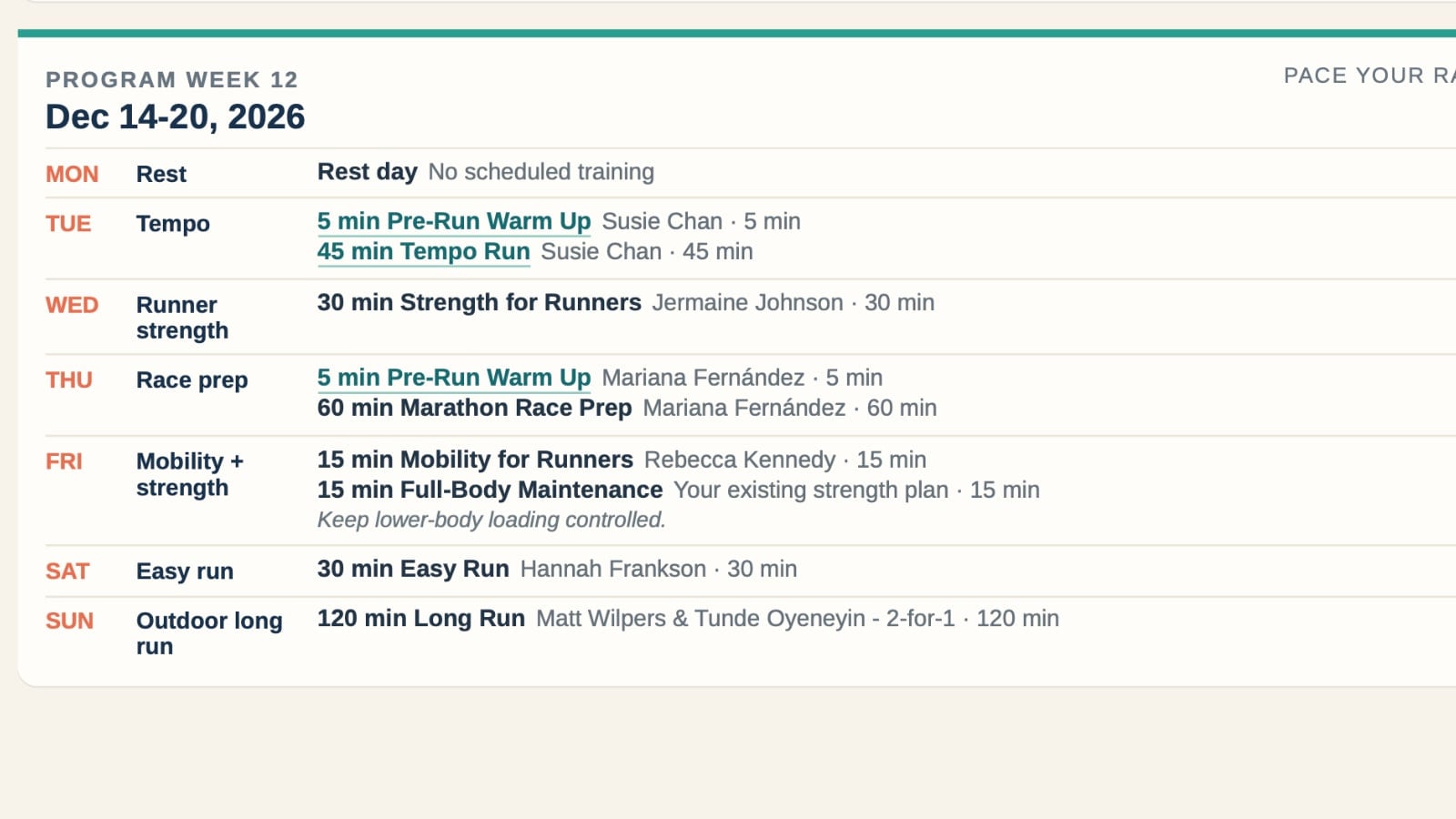
It created a polished 16-page PDF with two base-building weeks followed by the complete 18-week Peloton program.
Despite language during Muse’s startup suggesting it could look back at recent workouts when planning future sessions, the Peloton connector cannot currently access a member’s workout history.
When asked to analyze recent Peloton workouts, Muse explained that its connection covered the class catalog and scheduling, but not completed workouts.
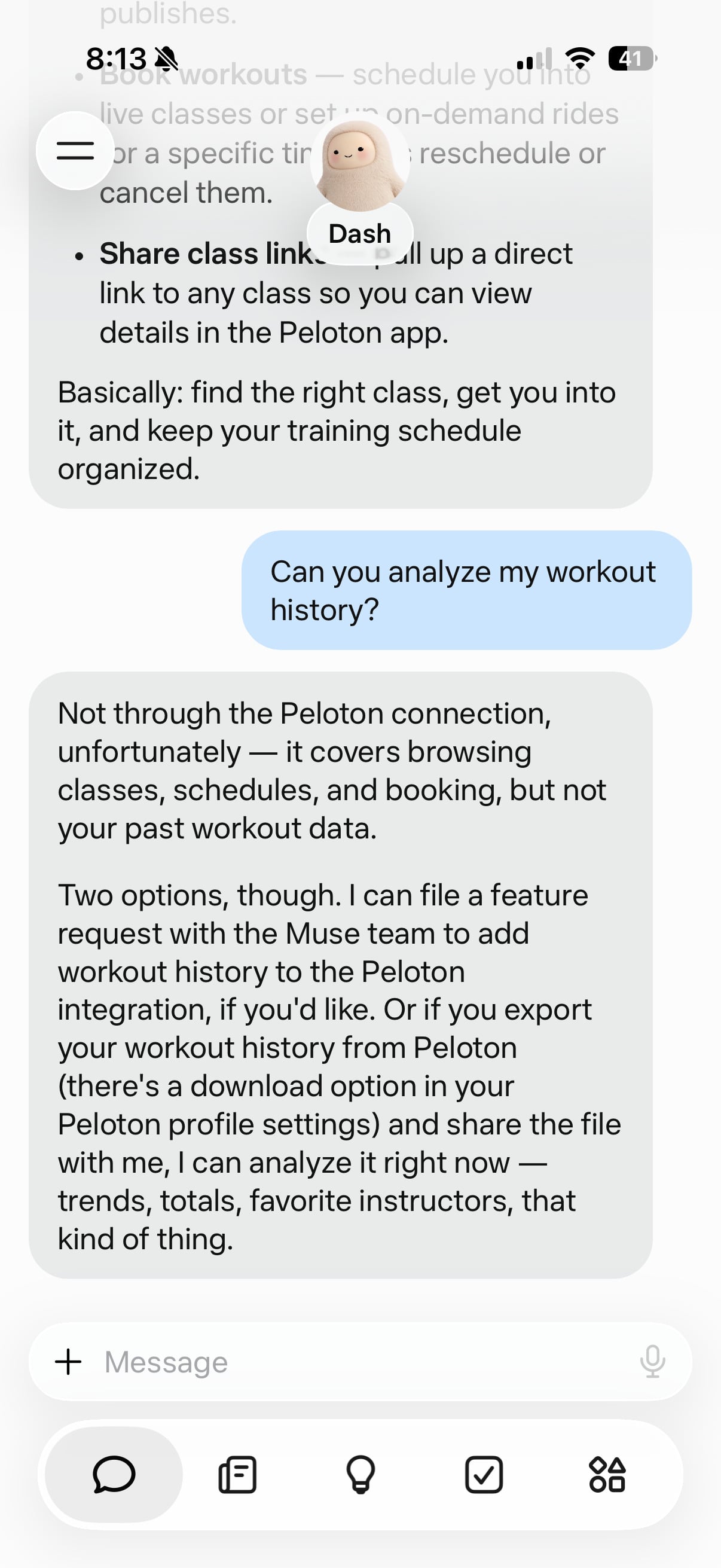
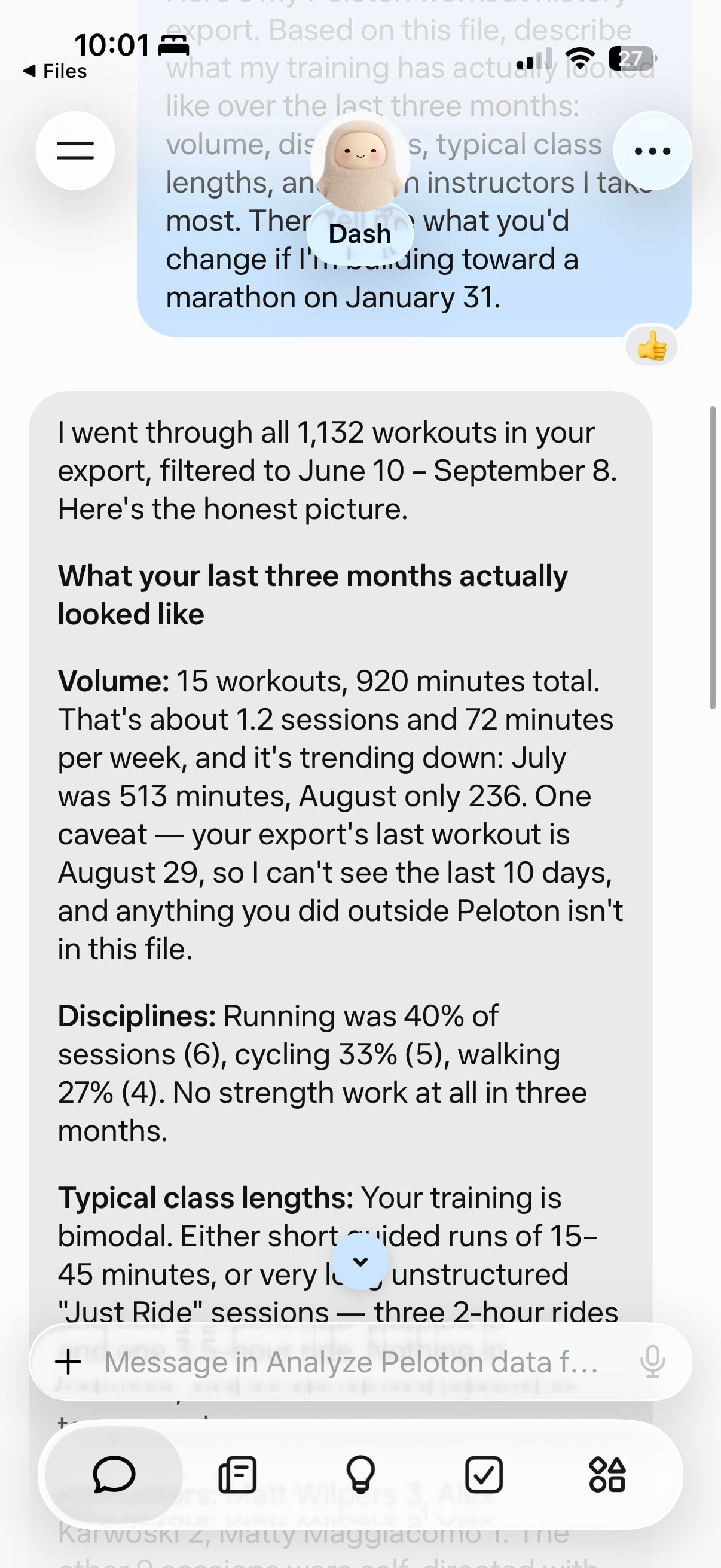
Muse suggested exporting workout history from the Peloton website and uploading the CSV file directly. We did that, but the resulting analysis from Muse was incorrect.
Muse said it had reviewed 1,132 workouts. The uploaded Peloton export actually contained 2,134 workout rows.
For the period from June 10 through September 8, Muse reported 15 workouts totaling 920 minutes. It described those as six runs, five rides, and four walks. The file actually contained 66 workouts during that period, totaling 2,997 minutes: 39 runs, 23 rides, and four walks.
Muse reported 513 workout minutes in July and 236 in August. The actual totals were 1,200 minutes in July and 966 in August.
It also said the most recent workout in the file was from August 29 and warned that the export appeared to be missing the previous ten days. The CSV included workouts through September 8.
When asked specifically about August cycling, Muse said there had been only one ride. There were four, including a 45 minute Classic Rock Ride with Leanne Hainsby on August 26.

Muse also claimed the six recent runs were all between 1.2 and 2.7 miles and that the longest run recorded during 2026 was 4.1 miles in January. The file included two 90 minute Long Runs in August covering 7.42 and 7.63 miles.
Some of its findings were accurate. Muse correctly identified several unusually long Just Ride workouts, including three two-hour rides and one three-and-a-half-hour ride. It also correctly noted that there had been no strength workouts during the requested period.
However, it missed most of the workouts and therefore produced incorrect totals, averages, and training conclusions.
Some of these errors may be due to timestamp & timezone issues. Given that this was Muse working from a CSV export (and the CSV was verified to have the full history) rather than the Peloton connector to run this analysis, this would be a bug on Muse’s side to fix, not Peloton’s.
We then asked Muse to use our history to update our marathon training plan, and it used the previous incorrect analysis to carry over to the plan.
The resulting training plan PDF was labeled “Built From Your Actual Training” and included a section titled “What the file says.” It repeated the claims that the longest run of 2026 was 4.1 miles and that recent running volume had peaked at approximately seven miles per week.
Neither statement was correct. Members should not rely on Muse’s analysis of an exported Peloton CSV without checking its figures first.
Despite all of this testing, Muse showed only 9% of the weekly free allowance used. That testing included numerous class searches, scheduling and removing workouts, four large training-plan builds, multiple PDF documents, and the approximately 25-minute marathon-plan revision.
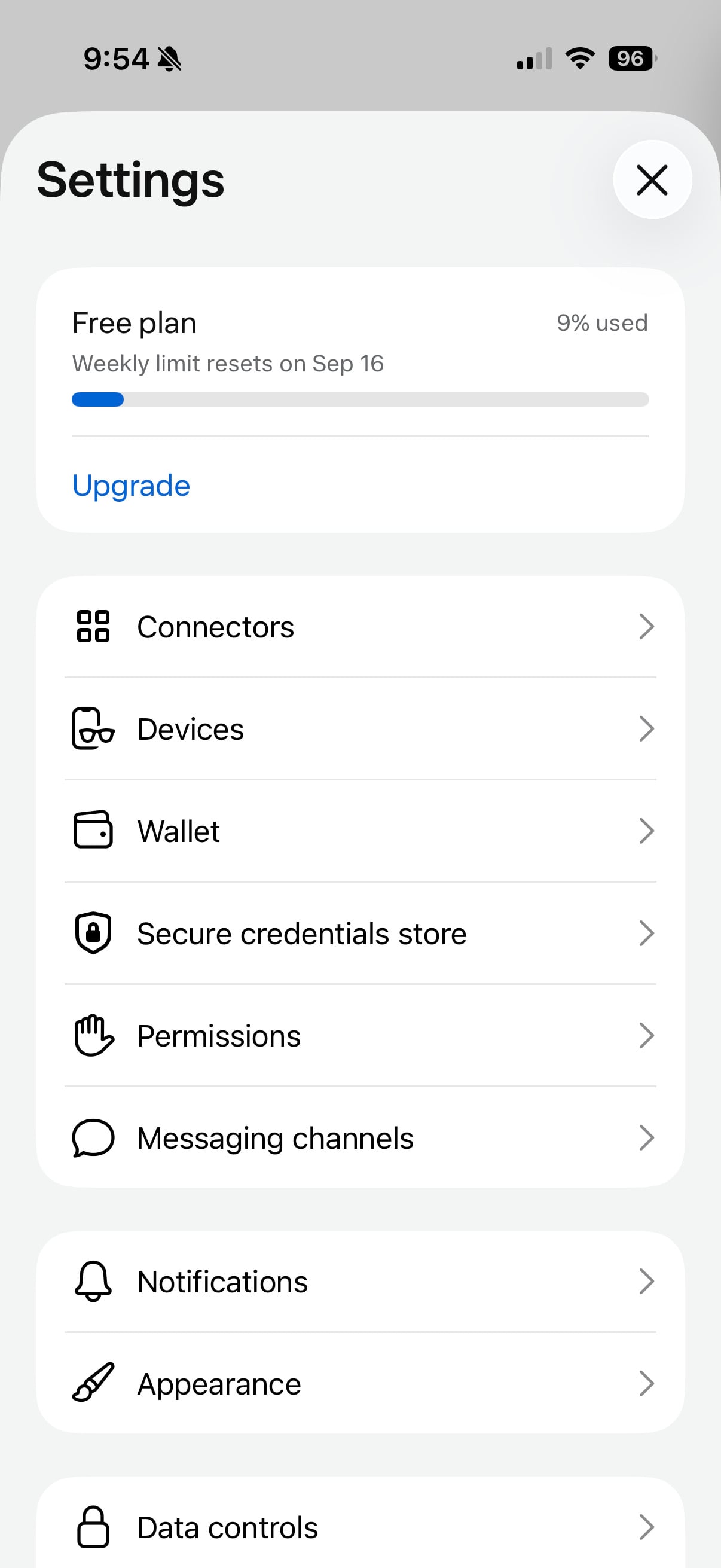
This is a significant difference from Peloton’s ChatGPT integration at launch, when free ChatGPT users could hit usage limits after only a few larger requests. Based on our testing, most Peloton members appear unlikely to need a paid Muse subscription simply to search for classes, schedule workouts, or occasionally build a training plan.
One feature that is unique to Muse at this point is its ability to continue working in the background.
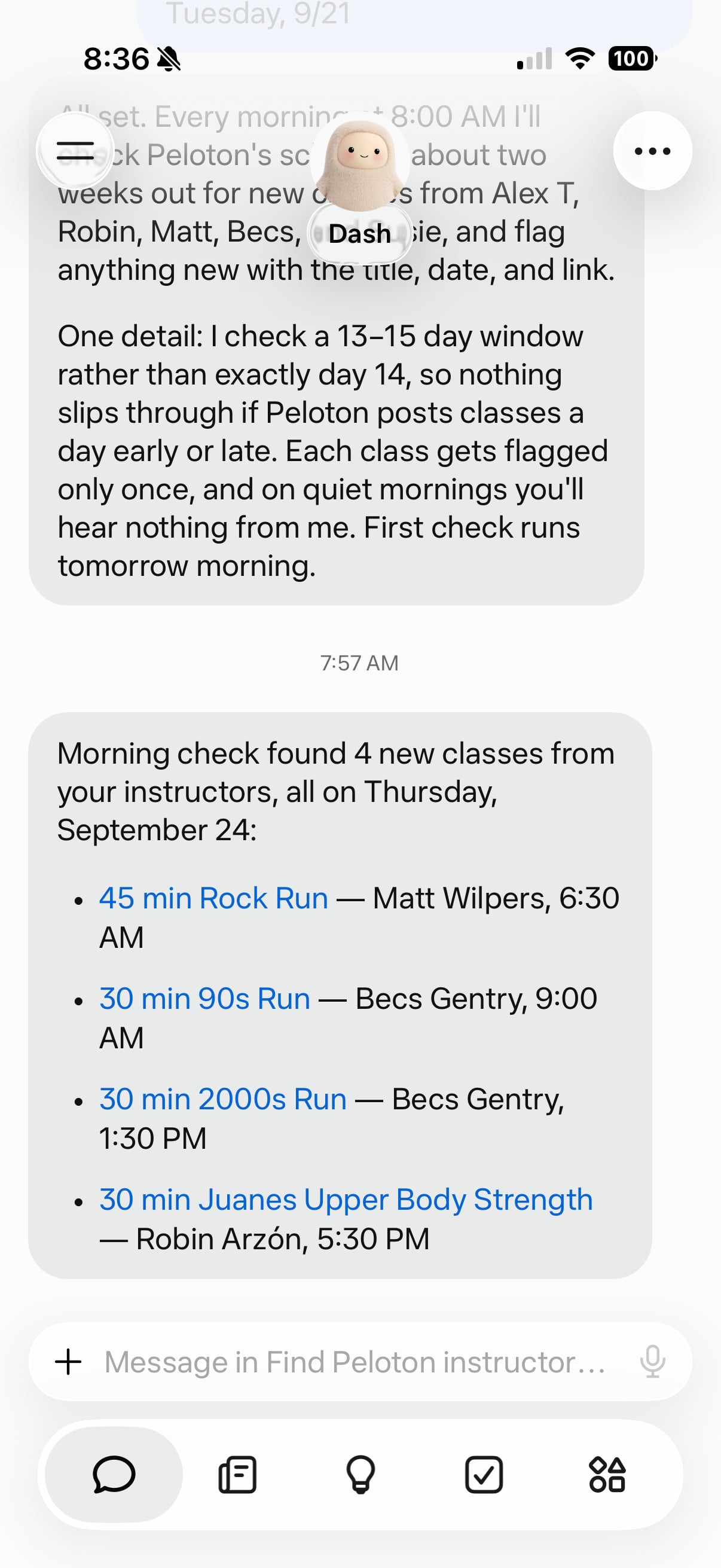
We asked it to check the Peloton schedule every morning at 8:00am for newly added classes from a list of instructors approximately two weeks in the future. Muse accepted the task and said it would check a 13- to 15-day window so it would not miss classes posted slightly earlier or later.
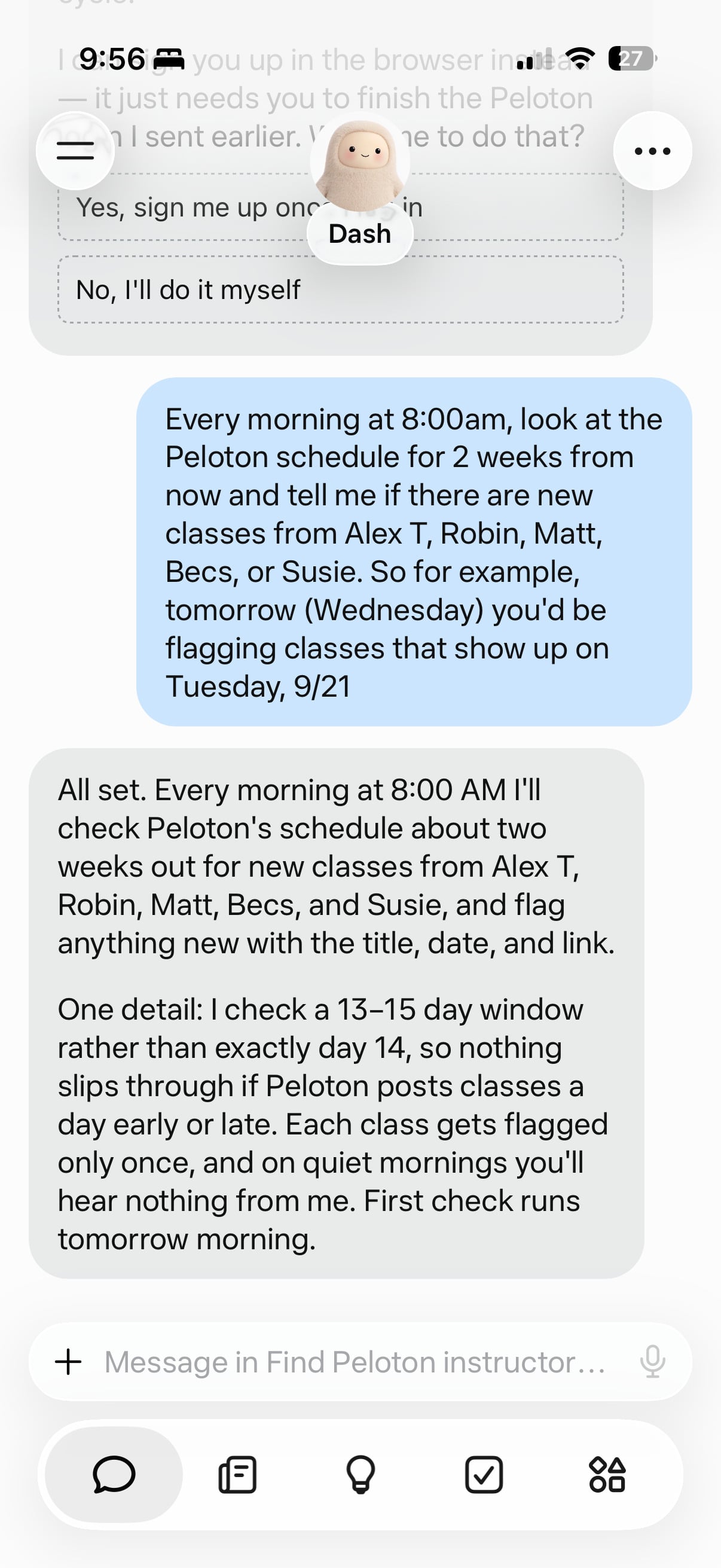
We also asked Muse to notify us the next time Matt Wilpers added a 120 minute ride to the schedule, and it agreed to check daily.
The next morning, at 7:57am, we got a push notification from Muse on our phone that Muse had found new rides matching our criteria
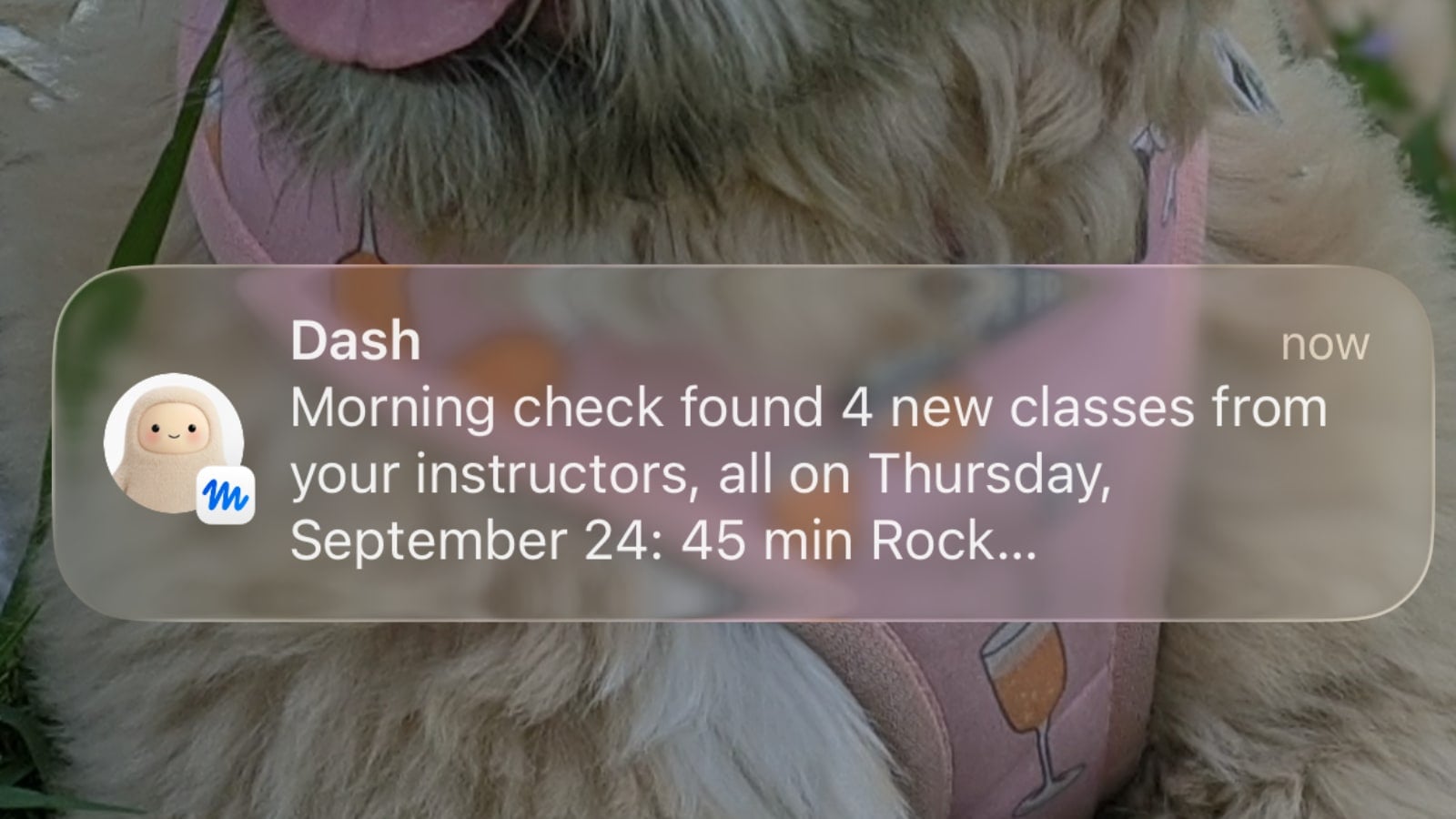
Opening Muse from the alert took us to the conversation, where it showed the new classes that matched our criteria. Again, these are technically further than the normal 2 week period that the Peloton schedule shows.
ChatGPT and the Peloton IQ chatbot require a member to ask a specific question at the time they want a response. Muse’s ability to monitor for new classes automatically could become one of the more useful parts of the integration if the notifications work reliably.
As previously mentioned, with the launch of Muse, Peloton members now have three major AI tools available to them that work natively with Peloton.
Peloton IQ lives inside the Peloton app and can use information from a member’s workout history, but its plan builder remains limited. It creates shorter repeating plans and allows Peloton to choose the specific classes.
ChatGPT can work with individual Peloton classes, but during our launch testing its class search and scheduling actions were unreliable.
Muse can also work at the individual-class level, and its scheduling actions worked much more consistently during our testing. It can create detailed, multi-month training plans, generate PDFs, schedule several classes at once, and monitor the future schedule without waiting for another prompt.
However, the third party integrations by Muse and ChatGPT still cannot directly read what the member has already completed.
Uploading a workout-history export should have provided a workaround, but Muse’s analysis missed most of the workouts and then used those incorrect findings in a personalized training plan.
While Peloton is working with major platforms, they are also building out their own AI features. Recent patents applications show AI generated voice cues from instructors and classes that change mid-workout.
Peloton is also allowing members to provide more customization to their own Peloton IQ AI tools. New movement preferences and content preferences let members give direct guidance into what they want the AI tools to suggest to them.
Will you be connecting your Peloton account to Muse?
Support the site! Enjoy the news & guides we provide? Help us keep bringing you the news. Pelo Buddy is completely free, but you can help support the site with a one-time or monthly donation that will go to our writers, editors, and more. Find out more details here.
Get Our Newsletter Want to be sure to never miss any Peloton news? Sign up for our newsletter and get all the latest Peloton updates & Peloton rumors sent directly to your inbox.

Leave a Reply